Andrew Haigh’s new film is a stunning exploration of loss and the complications of connection.
I walked into All of Us Strangers with the expectation that I would cry several times and be mesmerized by Andrew Scott’s performance. Both of these came true. But I also walked out with a renewed sense of gratitude for everyone in my life I love and have loved, especially those who are gone.
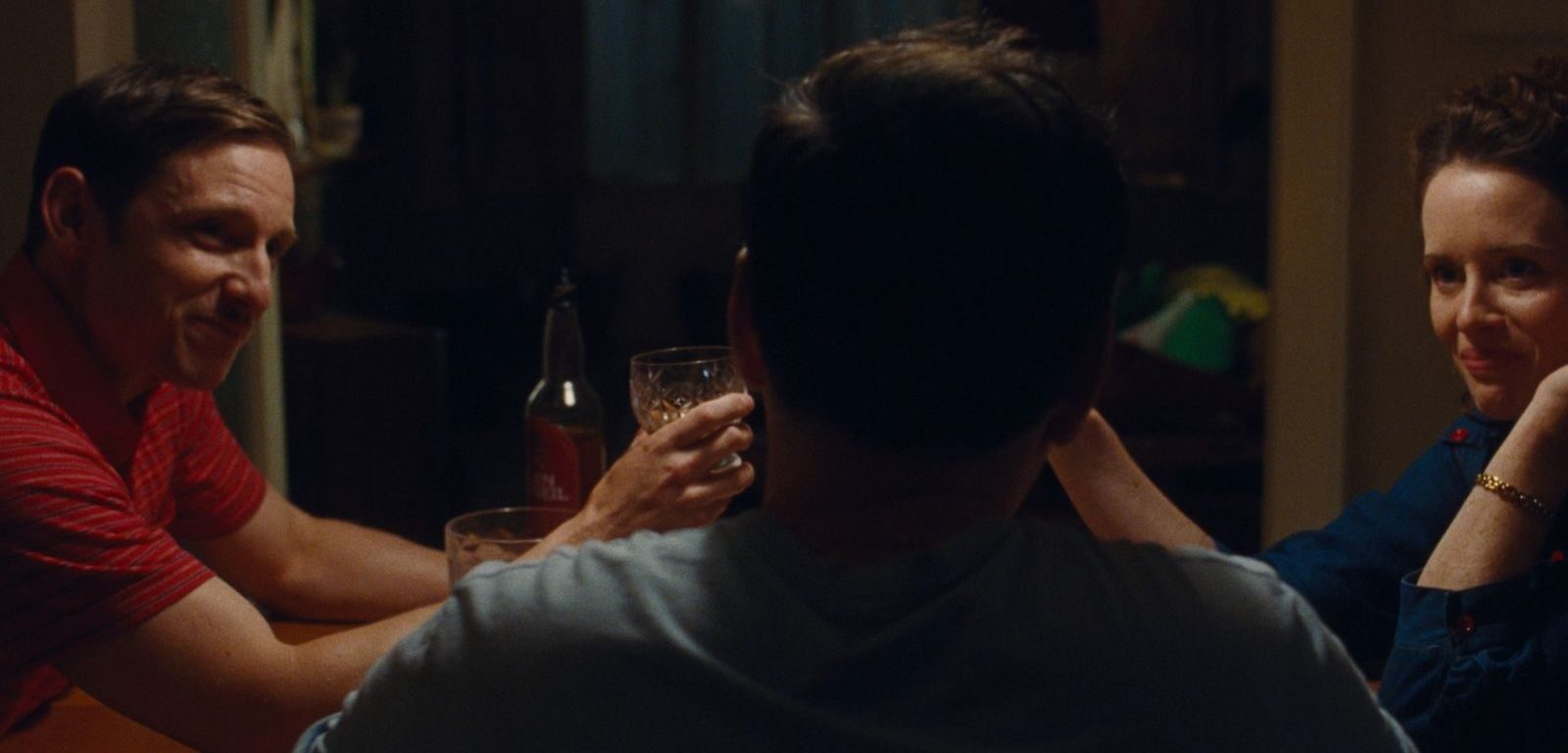
With thoughtful, concise pacing and beautifully vulnerable lead performances, All of Us Strangers tells the story of Adam (Andrew Scott), a screenwriter, who meets and falls in love with Harry (Paul Mescal). As their relationship develops, Adam finds himself drawn back to his childhood home to gather inspiration for his screenplay. There he encounters his parents (Claire Foy and Jamie Bell), just as they were when they died 30 years ago, and starts to visit them regularly. The film is set almost entirely in these two enclosed spaces—Adam’s apartment and his childhood home—as it unravels the connections between his past and present self. This is a simple, quiet story, with much to say about the complications of loving in the face of grief.
Andrew Scott is authentic and intentional, his expressions often swaying between open and closed, emotional and repressed, as his character learns to connect with others again. But I was surprised and extremely impressed with how Paul Mescal matched his talent. This is the first project I’ve seen him in, and I’ll certainly be seeking out more—he brought a raw desperation to Harry that felt genuine and heartbreaking. Claire Foy and Jamie Bell are equally fantastic in their roles as Adam’s parents. They carefully balance the mindsets of being parents in the 80s with acknowledging the mistakes they’ve made and moving toward something like closure with Adam.
I was equally impressed by the film’s script, music, and cinematography. In an era of 2.5 hour movies, I was pleasantly surprised by a story that doesn’t draw itself out too long. Each scene is intentional and adds to our understanding of the characters and the story unfolding before us. With “You Were Always on My Mind” used in the trailer, I was awaiting its appearance in the film and was startlingly touched when it’s used as a point of connection between Adam and his mom. The rest of the soundtrack felt equally deliberate and well-placed. This is also a beautiful film, making careful use of expansive shots to emphasize the loneliness of London versus the smaller, more contained movement of the camera in Adam’s childhood home.
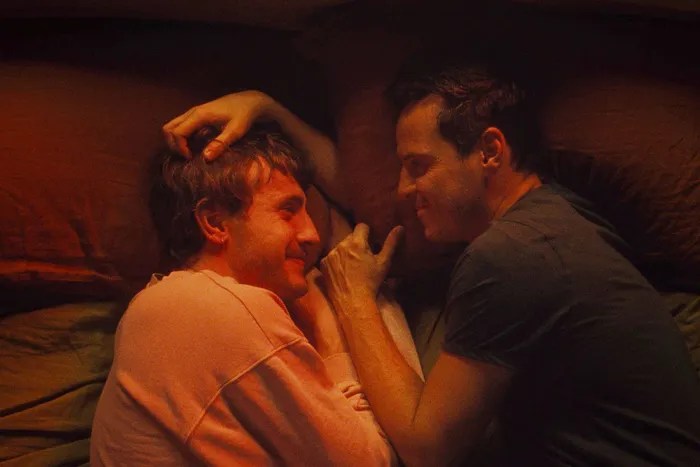
The best films teach us something about the characters, but also about ourselves. The crux of this story is Adam meeting his parents as an adult, something he never got to do with their premature death. Often, losing someone is a complicated thing—grief mingles with the guilt of anger for the ways someone has hurt us. Here, Adam not only gets to address his past but look toward his future, revealing to his parents that he’s gay and showing them who he is now. In turn, they remind him where he came from and the love that he was once open to, before the fear of loss took hold. As a queer person who also lost a parent at a young age, I felt like this film was looking me in the eyes and telling me: that love mattered. Just because it wasn’t forever doesn’t mean it meant less.
While this film will most likely be overlooked this Oscars season due to the sheer volume of contenders, it’s far and away my favorite not just of this year, but probably of the last five. If you can, go see All of Us Strangers. And bring tissues.
 How Lucky Media