
Optimism in the face of open-air panic
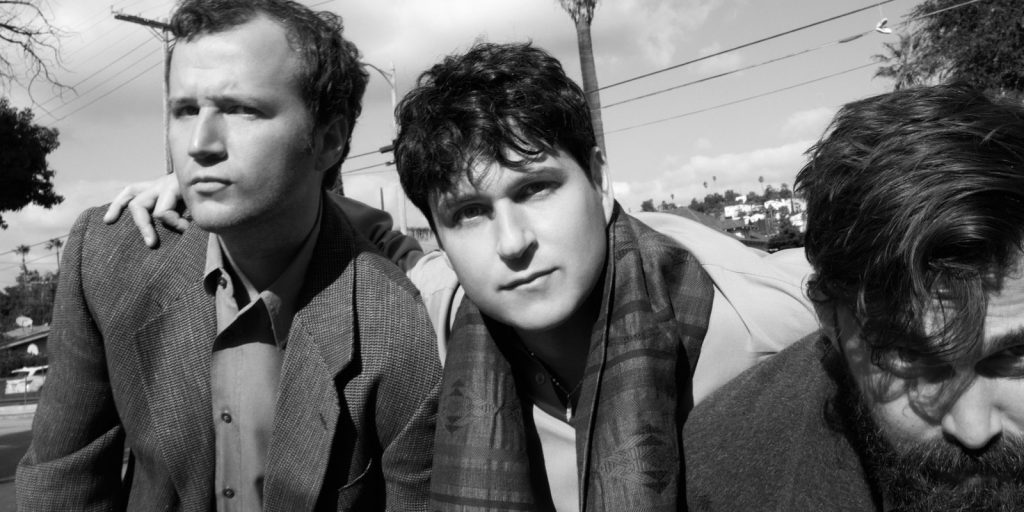
Who among us could blame frontman Ezra Koenig for breaking a half-decade hiatus with the immediacy of the lyrics “Fuck the world“? A lot has changed since Vampire Weekend last released a full studio record. A global pandemic that infiltrated the delicate balance of our everyday lives has a way of fostering an already-burgeoning animosity with the state of the world. International political tensions reaching a boiling point, a genocide made plain for all to see, the trappings of capitalism failing to provide the basic needs of citizens in an age of skyrocketing cost of living, artificial intelligence threatening to wipe out the role of artists entirely – it’s easy to see why those three words usher listeners in medias res as they first bite into VW’s fifth studio outing, Only God Was Above Us. Whereas 2019’s Father of the Bride reveled in a lack of restraint (that ultimately resulted in more songs being worthy of remaining on the cutting room floor) with respect to its tracklist, OGWAU boasts a very modest, neatly-ideal 10 tracks with which to reacclimate ourselves.
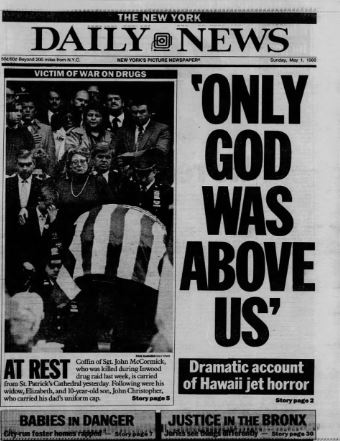
The title of the record comes from a 1988 interview with a passenger aboard Aloha Airlines Flight 243, infamously inbound to Honolulu when the roof of the plane had been ripped clean off as a result of an explosive fuselage decompression (the irony of which is not lost on the modern listener in a time where Boeing planes are continually failing mid-flight). The interviewee recalls the utter panic of the gale force winds inundating the vehicle, and the fright of looking up at the clouds where “Only God was above us.” This headline had also been featured in photographer Steven Siegel’s “Dream City” series, from which the record’s cover originates. That distorted image of an upright subway passenger reading about the horrifying ails of the modern world as a fellow rider defies the laws of gravity serves to underscore the headspace with which Koenig & co. approach their fifth effort.
On madcap opener, “Ice Cream Piano,” the cynicism of that lyrical three-word opening salvo are revealed to be an exchange between Ezra and a jaded partner who refuses to see the good in society. “You don’t to want to win this war/’cause you don’t want the peace,” he diagnoses atop plinky piano chords. Scuzzy bassline and pounding percussion allow chaos to bloom naturally, typhooning into a second verse that fires on all cylinders. “The world don’t recognize a singer who won’t sing,” Koenig declares on the chorus – a rebuttal to the open pessimism of the track’s introductory moments. If you are capable of joy, it’s up to you to put it out there into the world. Do not deprive it of your gifts. Especially in this day and age. It’s this very track that breaks a 16 year-long wait to have vampires featured explicitly in the lyrics – “I see the vampire walkin’, don’t be gripped by fear, you aren’t next/We’re all the sons & daughters of vampires who drained the old world’s necks.” The second ringing-in of the chorus culminates in a string-laden whirlwind delivered with the kind of urgent youth as their self-titled debut.
Follow-up single “Classical” dons breezy bassline and ruminations on how cruelty becomes commonplace: “Four hundred million animals competing for the zoo/It’s such a bleak sunrise/Untrue, unkind, and unnatural/How the cruel, with time, becomes classical.” The underlying groove hearkens back to the days of “M79”, while also introducing tasteful horn sections that soar before Ezra’s delivery of the chorus. This has all the makings of an instant classic VW single, complete with slick guitar licks and impassioned moral convictions.
“Capricorn” reads as a love letter to those inheriting lives that outpace our own livelihoods. Aging is both a theme and concept that the band have never shied away from; as Ezra Koenig, Chris Baio, and Chris Tomson reckon with their 30’s in the rearview mirror, they muse upon what’s left to look ahead towards. “Who builds the future?/ Do they care why?/ I know you’re tired of tryin’,/Listen clearly, you don’t have to try.” Finger-plucked piano and a screeching synth backline offer a multitude of textures that briskly the listener across a four minute runtime. It’s here that I should mention that the relationship the record has with the past tense – be it intentional or otherwise – involves a handful of tracks bearing a playfulness regarding nostalgia wherein the mileage will vary per listener. Be it the callback to “Mansard Roof”‘s drum pattern on “Connect,” “Gen-X Cops” featuring a 1:1 melody retread of “Hudson,” or even the passing lyrical wink at Diane Young on “Capricorn” (of which Koenig swears was purely coincidental on the band’s new podcast, Vampire Campfire), how one will feel about how this impacts each song’s originality will assuredly be a mixed bag.
In lieu of such claims, “Connect” remains the band’s most experimental track to date. Playing with structure, sonic texture, and darting from one energy to the next, the interplay between piano, bass, drums, and synth allow it to constantly have surprises around every corner. Every seemingly-disparate element is elegantly anchored by Ezra’s seraphic vocals as well as collaborator Ariel Rechtshaid‘s flawless production.
The back-to-back easygoingness of “Prep-School Gangsters” into “The Surfer” allows the listener to catch their breath after the ensuing windstorm of the tracks prior. Both bear deep cut savvy that inevitably will have them revered as hidden gems. “Gen-X Cops” arrives on the scene with an undeniable face-shredder of a guitar lead. As mentioned, be it premeditated or not, Ezra’s vocal delivery here bears a striking resemblance to that of Modern Vampires of the City‘s penultimate track; “Each generation makes its own apology” maps itself perfectly onto “All you who change your stripes can wrap me in the flag.” But that persisting idea – that every generation must reckon with its past in order to forge its future – finds itself nestled into the song’s very composition.
“Mary Boone” directs a heartfelt tribute to the eponymous famed New York art dealer whilst reckoning with the economic woes of The Big Apple. A backing choir of layered Latin chanting affords Koenig both the bravado and the spiritual wherewithal to deliver one of the catchiest bridges in the band’s discography: “Book of Hours, Russian icons/And sand mandalas and Natarajas/And hex-sign barns/Ando churches and whirling dervishes.” The specificity of these selections highlights religious iconography that has moved beyond the pure function of spirituality into being recognized more as popular forms of folk art. The track cements piano as the prized fighter in this album’s instrumental roster.

“Pravda” feels and sounds like an extended coda to FOTB’s “Flower Moon,” going so far as to outright namedrop the mighty orb at the end of each sequential verse. It wears a similar slinking danciness that has plenty of onstage potential for Koenig’s signature funky-white-boy footwork. Closer “Hope” rounds out the tracklist with a whopping 8-minute runtime that eclipses all prior durations (move over, “8-minute Cape Cod” enjoyers). It is a conclusion worthy of such a highly-anticipated tentpole release, and bookends the jaded cynicism of the record’s opening lyrics with a tone of utmost optimism: “I hope you let it go.” All the fear holding you back. All the anger weighing you down. After all, that final note of optimism remains true in the case of Aloha Airlines Flight 243 – while many injuries and one fatality were reported, an otherwise miraculous landing of the aircraft touched down at Kahului Airport in Maui. The incident would pave the way for many newer flight measures to be introduced, in the hopes that a safer world would be right around the corner. So too does Only God Was Above Us stick its landing with crossed fingers and a newfound fondness for solid ground.
 How Lucky Media