
The year is 2008. Well over a decade since the infamous arrest of Robert Downey, Jr. wherein he was apprehended for the possession of heroin, cocaine, crack, and an unloaded .357 Magnum handgun whilst barreling down Sunset Boulevard. RDJ is set to star in back-to-back summer blockbusters Iron Man and Trophic Thunder, the former of which would be the first domino in a cascading effect that would leave pop culture as we knew it in a stranglehold the likes of which it is yet to free itself from.

That first Marvel foray into cinematic universe storytelling, for all its critical acclaim and commercial net worth, rested on a decidedly modest, simple, emotionally-grounded comic book tale about Tony Stark‘s rise to herodom. As the credits rolled, Samuel L. Jackson bursts onto the scene as the incomparable Nick Fury, relaying his wish to “put a team together.” Fast forward four years, and The Avengers sees Downey, Jr. reprise his lead role as Iron Man alongside his MCU kin all together on the big screen for the first time. Understandably, it is a runaway hit, amassing $1.5 billion in worldwide box office revenue, more than sextupling its budgetary costs. Needless to say, other studios wanted a slice of the cinematic universe pie.
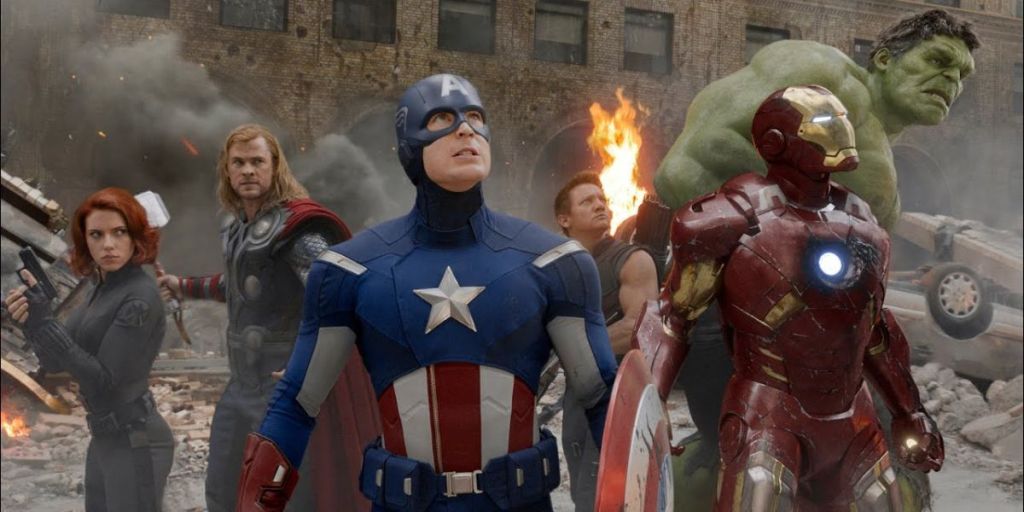
And though many attempts were made, fewer still quite shared the rousing success that the Marvel Cinematic Universe maintained in its first phase. The oft-forgotten Dark Universe only made it so far as its much-maligned Tom Cruise-centric The Mummy 2017 remake before tripping over itself to the point of immediate cancellation. The DC cinematic universe (now rebranded DCEU) made a handful of clumsy attempts to replicate the MCU’s grip on popular culture, notably foregoing Marvel’s road map of establishing individual characters in their own films before having the conflict culminate in a massive crossover event. The continuous fumbling of efforts on the part of the now-DCEU stand as a testament to artistry taking a backseat in the name of profit – a throughline idea I will use to thread the needle about our current obsession with multiverses. 2016’s hastily-assmbled Batman v Superman: Dawn of Justice aimed to be a starting point for many of the members of The Justice League, despite the audience being given next to no emotional context for their appearances within the film proper.
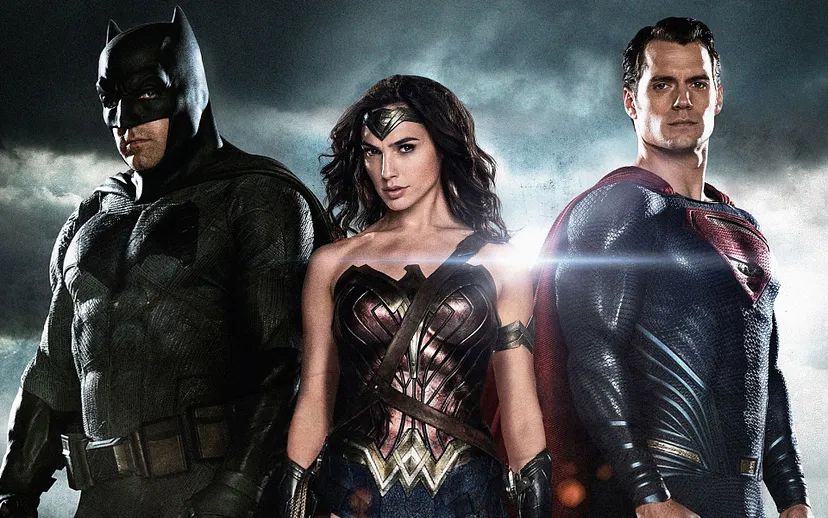
And so we arrive at The Funkofication Effect. Some films are so fueled by bottom lines that the cynicism with which they are made is all the more apparent in their presentation – eschewing satisfying storytelling for cheap parlor tricks all in the name of a cool billion bucks. These low-aspirational attempts at meaningful media just want to gesture lazily at their prized Funko Pop collection and have the audience reward them with the requisite oohs, aahhs, and several zeroes in their bank account. BvS:DoJ is a bonafide Funko Fest that puts cart before horse in every conceivable way. And yet, the film made just shy of a billion dollars at the global box office. Corporate cynicism at that moment had proven to be profitable. And the endless waves of vapid, Funkofied entertainment would consume the very cultural climate of the time; “art” that was made almost entirely with the hopes that the audience would reenact that one Leo DiCaprio meme (you know the one), all the while leaving all of the substantial character beats and narratives on the cutting room floor to make more space for feckless fodder.
Oh no, gesturing at vapid plastic would not end there. 2018’s Ready Player One is built on the bones of a narrative with The Funkofication Effect baked right in, that manages to host a near-future death battle with many beloved franchise iconographies sharing the same bleak screen – the DeLorean zipping past as Master Chief uses a Plasma Sword on a Ninja Turtle. The narrative aims of the film can often take a backseat to the sheer spectacle of “ooh, look at that! I know that!” until all meaning is rendered inert. Worse even, is that the myriad of IPs thrown in the visual blender don’t at all have to make logical sense, so long as the audience understands the reference – who cares if the entire point of The Iron Giant was that he was a sentient, misunderstood gentle automaton that was against the use of needless violence? Heck, we’ll just throw him in there blasting fools left and right, don’t overthink it. Such continues to be the pattern with wielding nostalgic icons – they often return diluted.

2019’s Star Wars Episode IX: The Rise of Skywalker bludgeons the audience with a similar blunt-force misuse of the series’ own icons. At the risk of opening the continual can of worms at the mere mention of Rian Johnson’s The Last Jedi, Episode IX abandons more than just the thematic framework from the film prior. It actively relishes in using its runtime to undo the forward momentum of inarguably the most thoughtful film of the sequel trilogy. Kowtowing to the lowest common denominator of online forum troll, The Rise of Skywalker is the perfect cross-section of corporate greed and cynical cowardice; a film that spends its time on its knees begging, pleading “Please! Please! I didn’t mean it! Look! It’s Lando! You love Lando, right?”
As the conclusion to not only its current trilogy, but a trilogy of trilogies, there is not a singular existing character by the end of the film who is made better: Rey is stripped of all agency, her power explained away by a bloodline riddle already satisfyingly answered and explored in the previous outing, Finn finds out he’s Force Sensitive, but he can only use his newfound powers to shout “REYYYY!!!” from the top of his lungs, Poe is outed as a stereotypical drug dealer in the time before The Resistance. So on and so forth. The film oozes with pathetic contempt for creativity, existing almost exclusively as a half-hearted apology to those challenged by the concepts and arcs in Episode VIII. Moreover, it’s stuffed to the gills with moments of Funkofication – a climactic ship cavalry somehow arrives at the behest of known smuggler and recent hermit, Lando Calrissian, as every recognizable ship model in the Star Wars universe appears for what should be a thrilling cameo that instead completely falls on its face when given even a few seconds of thought – not a single ship answered Leia, the literal poster girl of Hope in the galaxy on the salt planet of Crait in the Outer Rim, but somehow, someway Lando of all people can wrangle the largest fleet ever assembled in a manner of hours in the uncharted environs of the Unknown Regions? Likely story. TRoS is a particular entry that seemingly tipped the scales of pop culture towards full-filt, round-the-clock corporate cynicism. Meaninglessness had crept into our most beloved properties, and showed no signs of slowing.

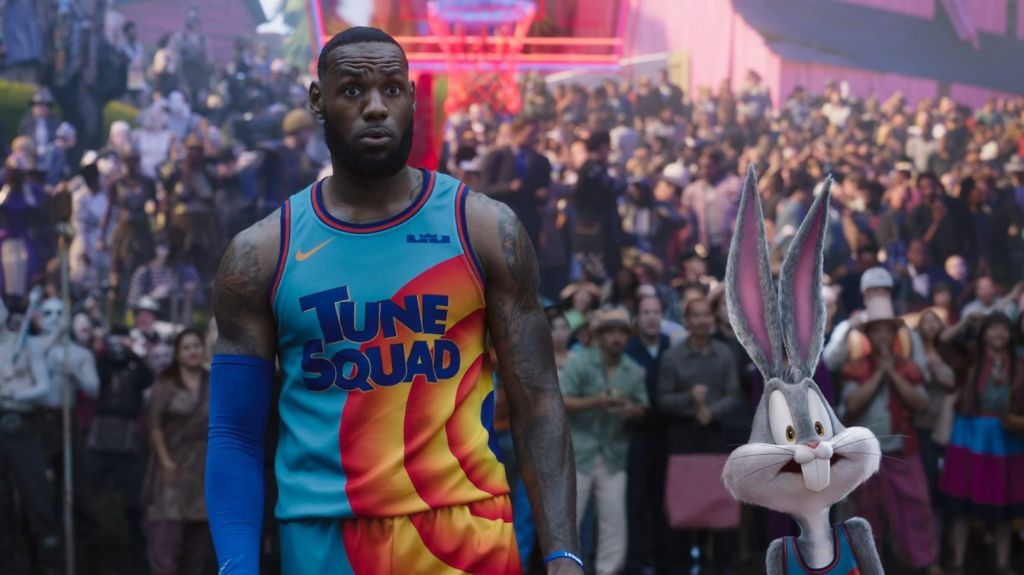
The outward desire to merely showcase intellectual properties goes hand-in-hand with the accelerated cynicism that The Rise of Skywalker brought with it; 2021’s Space Jam: A New Legacy adopts the same meaning-starved tendencies as Episode IX with the same fervor to fill the screen with as many references as the eye could behold as Ready Player One.
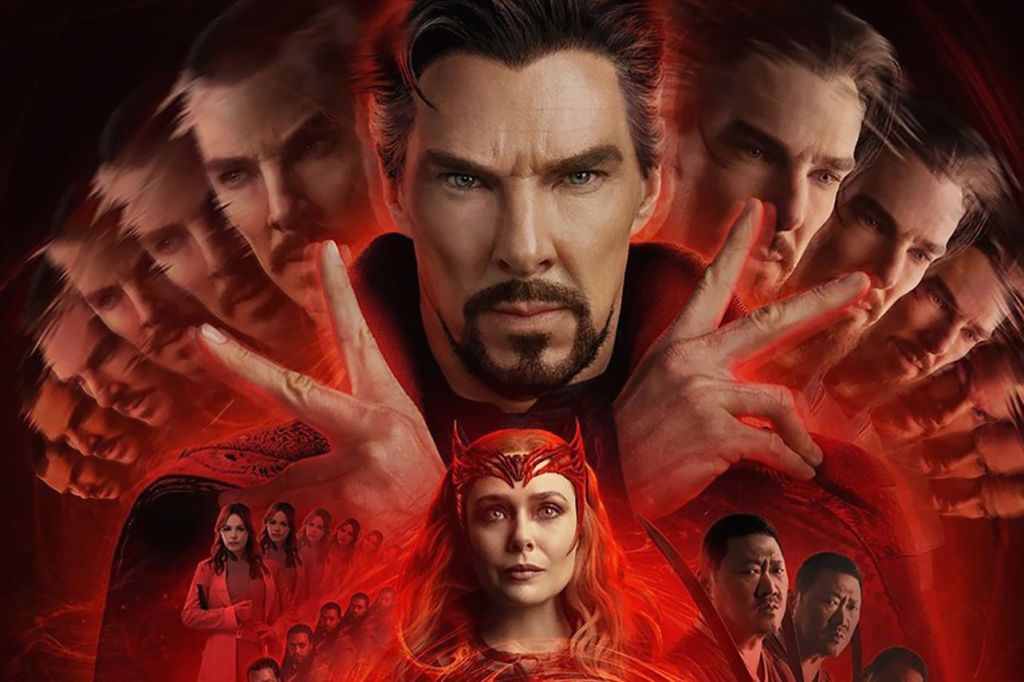
At the same time, Marvel Studios closed out a handful of mainline phases, inching ever closer to the highly anticipated inclusion of the multiverse – a titillating threshold for both viewer and studio stiff alike. What new horizons await as we uncover the many realities that coexist in parallel simultaneously? If you were to ask Sam Raimi in 2022… apparently, not a whole lot. With Doctor Strange in The Multiverse of Madness, we receive much more visual flair thanks to the more singular vision of an auteur at the helm (already proving himself with at minimum two-thirds of the Tobey Maguire Spider-Man trilogy), and yet there is still a persistent lingering feeling that the new multiversal frontier would pose serious challenges for resonant storytelling. Are the stakes inherently lessened if a death could happen in one timeline, but we could simply replace that version of a character with another? Would hopping from one universe to another lead to any lasting consequences? Would the film shake loose the trend of capitalizing on flashy cameos to make up for lackluster narrative arcs? Unfortunately, bottom lines are still a priority, and though the aforementioned Multiverse of Madness only really features a handful of realities of any consequence (there’s a sole sequence of Doctor Strange quickly falling through a myriad of alternate universes, though all the main character beats exist within only three, maybe four of that subset), we are treated (subjected?) to a violent display of the Scarlet Witch dispatching a host of cheer-inducing appearances from the Illuminati (a secret organization of powerful heroes meant to protect the multiverse in secret from high-level threats). The point-and-clap of it all is undone with immediacy by the bloodshed that follows.
It’s not all doom and gloom, however. Don’t let the title of the article fool you – for those who didn’t catch the cheeky nod to Dr. Strangelove, allow me to make myself clear: I have not, in fact, stopped thinking, nor do I love the Funkofication of media; I am merely dissecting the circumstances that allowed our particular hyperfixation on multiverses to emerge proper, and what damage it has placed on storytelling as a whole. It seems nowadays that just about every medium wants to throw their hat in the multiversal ring – comics, novels, TV, film, even podcasts. The pervasive shallowness that has proven so daunting to shake inherent to the concept means that special care must be taken – especially on a character level – if a story is to use the sandbox of the multiverse satisfactorily. I contend that there are two prime examples of such care:
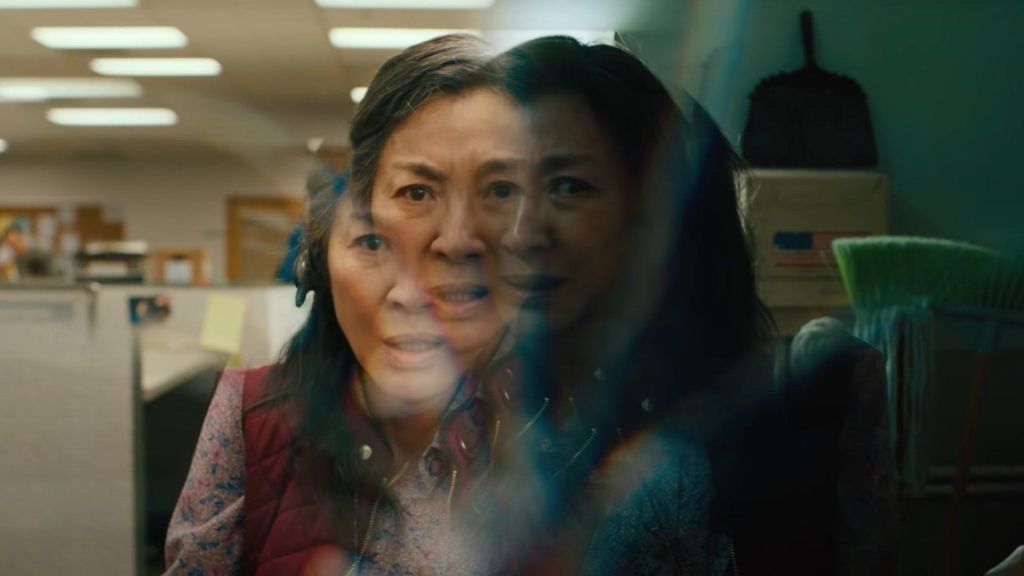
Would you believe me if I told you that the minds behind the “Turn Down for What” music video were responsible for one of the most excellent uses of parallel reality storytelling? With Everything, Everywhere, All At Once, The Daniels craft a tale that centers on family, generational trauma, and the endless quest for acceptance and understanding. The backdrop of the multiverse is a means for the disheveled Evelyn Wang to learn to have empathy for her distant daughter, with whom she often comes into conflict with on the grounds of her sexuality. Throw in a timeline-leaping megalomaniac and the ability to synthesize skills from alternate dimensions, alongside the occasional dildo-shaped trophy, and you’ve got yourself an oddball stunner that never fails to keep the familial drama front and center. Despite the many timelines throughout the film, EEAAO remains deeply grounded in its characters and themes first and foremost.

Alongside The Daniels, I must shout-out Lord & Miller’s animated Spider-Verse trilogy, the first two of which have already proved to be stunning, exemplary pieces of art that, though they do feature many a recognizable face, does not rest on the laurels of Cameo Culture to do the work that truly matters. Into the Spider-Verse is a pitch perfect superhero origin story that reckons with the legacy of the mantle of Spider-Man himself, while also platforming Miles Morales as the definitive lovable, root-for-worthy incarnation of our favorite friendly neighborhood webslinger. Whereas its follow-up, Across the Spider-Verse, has far more to marvel at (pun intended), its vibrant pastiche of many worlds and art styles never detracts from the rock solid foundation of character-driven storytelling, buoyed by an ensemble of nuanced, extremely likable Spider-folks. And despite a chase sequence that took animators roughly a year to assemble, and a handful of genuinely hilarious cutaway gags, the lively animation never once feels steeped in narrative or corporate pessimism. Both entries comment on the state of franchise canon in refreshing ways that posit that anyone can don the mask, while condemning the collective cultural imagination that envisions pain as a sole requisite for our heroics.
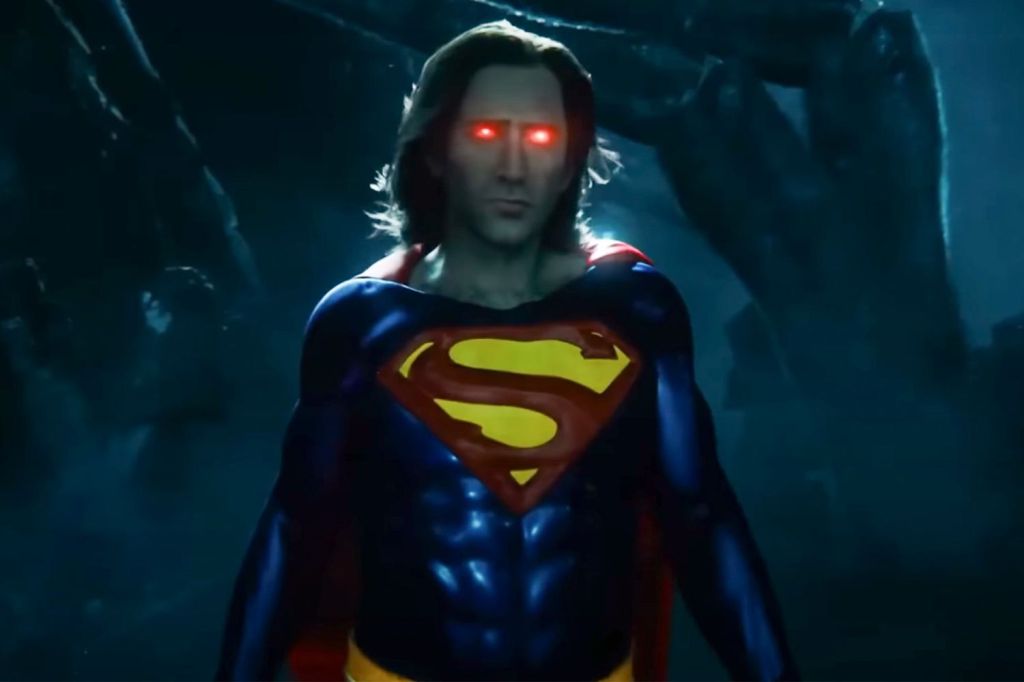
On the complete other end of the spectrum, 2023’s disastrous The Flash bends over backwards in service of well, flash. Substance is nowhere to be found here. Muddy CGI and sequences that look ripped straight from a video game prime the audience for an audio-visual experience that asks you to not feel a single emotion, save for emulsified gratitude when yet another empty cameo appears onscreen. This film is the harbinger of a particularly egregious trend that has seen a recent uptick in pop culture: appealing to nostalgia for things that simply did not happen. The utterly baffling Nicolas Cage-as-Superman cutaway cameo requires a level of familiarity with knowledge so far divorced from any comic book source material. No longer are these films simply in conversation with just the audience, they are in conversation with unactualized projects that have never seen the light of day. This adds yet another messy layer of required knowledge, lest the viewer risk not being in on the joke (or understanding why in the heck the people around you are cheering for a cameo from something that to your knowledge has never even existed).
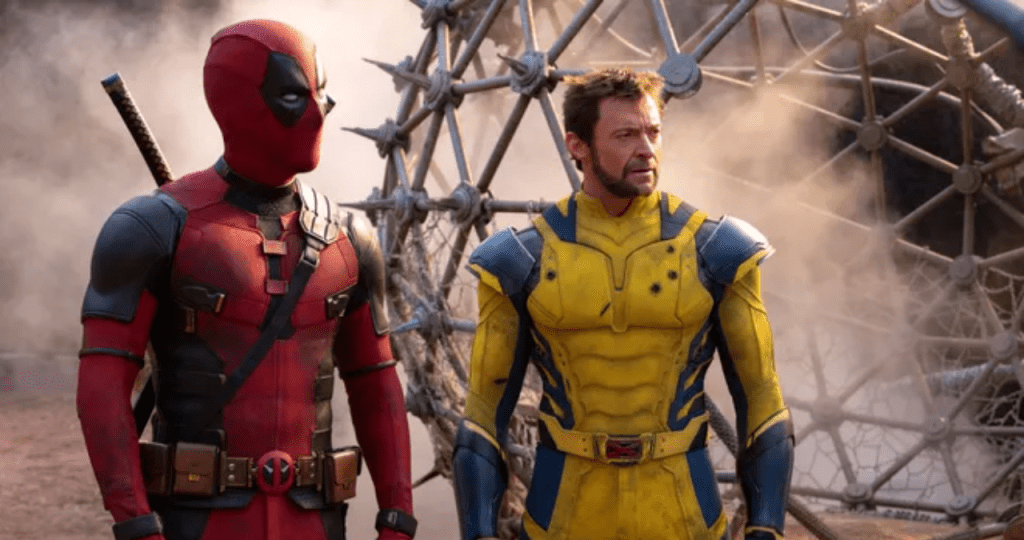
This past weekend, the latest Phase 5 Marvel film debuted and quickly prompted this entire article. Deadpool and Wolverine is a microcosm of the failings of multiverse storytelling. For my money, it will be perhaps the least engaged I’ve ever been by a film that will undoubtedly go on to make well over a billion dollars. DP&W is almost lab-grown in its precision to be as widely-beloved by general audiences as humanly possible, but so much corporate cynicism lies just beneath its latex surface. It is water cooler fodder that radiates “coworker energy,” and lacks any substantial narrative goal beyond bandying about the many Funko Pops it dares to brazenly parade around. Emma Corrin‘s Cassandra Nova plays the role of the primary antagonist, though Matthew MacFayden‘s Paradox, powerless as he is, remains the more concerning villain – the literal embodiment of franchise IP management. The film’s balletic action is rendered weightless when set against the non-existent drama it helps propel. It even tragically (and on more than one occasion) takes from The Flash‘s phantom nostalgia playbook, delivering more never-wases. Furthermore, of the many cameos that befall the viewer, none could accurately be described as “characters” in the story – at best, they are shiny accessories. At worst, they are ghoulish approximations of a character you once knew, devoid of any personality, motivation, desires, or goals. They merely exist as a living “APPLAUD NOW” cue card to the audience.
Whereas the first two Deadpool films operated with a similar sense of irreverence, they were anchored by completely serviceable baseline narrative arcs. Such lofty ambitions are completely lost in the mix this time around, as the third entry is wholly subsumed by the need to showcase properties rather than lampshade anything resembling a meaningful story. Hugh Jackman does his very best to offset Reynolds’ mile-a-minute snark with some genuine gravitas, but the film is simply borrowing existing emotional context from better features, namely 2017’s Logan. And while I can’t help but feel as though my reaction to this film is one that would make a general audience member accuse me of being incapable of fun, I merely take a step back and ask myself: what, if anything, about the status quo has changed in any meaningful way?
And I genuinely can’t give you a good faith answer, even after stewing on it the whole past weekend. I say it so sincerely when I make note that I am happy for you if you enjoyed yourself whilst watching this film, but I could not shake the feeling that the corporate cynicism that has been brewing for so many years has made a definitive victory as the credits rolled. I am always on the side of art, of meaning, of substantial narratives with substantial character arcs, and I can’t help but feel as though the multiverse of it all has only offered greater opportunities for those foundational pillars of storytelling to fall by the wayside in favor of cheap parlor tricks. Nostalgia will never be a substitute for substance. Character and theme will always be the metric by which a story’s longevity will be measured. The stakes must be felt to be remembered. If everything and everyone is immortal, and there are an infinitude of timelines to necessitate that the wheels keep a-turnin’, at what point do we mentally check out of the story? At what point does the narrative become a flimsy backdoor through which we crawl to receive more morsels of Funko Pop dopamine? My goal with this deep dive is to make one assertion impendingly clear:
Stories are only stories because they are equipped with characters that make choices and undergo some form of progression. But with the lurid temptations of the multiverse, it becomes increasingly tempting to shy away from the duties of fulfilling storytelling in the name of airing out a toy collection for the public to see. The quality of a story should never be an open sacrifice in the name of empty spectacle. And the best stories have things to say, themes to explore. It should be an utmost priority for storytellers to put character, theme, and arcs above profit margins.

Rightly so, The Nostalgia Ouroboros brings us right back to where we started – with Robert Downey, Jr. It’s only been a matter of hours since the Comic Con Hall H announcement of Avengers: Doomsday, a wholesale replacement of the previously-planned The Kang Dynasty. While the announcement was met with uproarious applause, I again feel the cynicism setting in. All of the prior buildup with Jonathan Major‘s Kang the Conqueror supplanted in an instant. It’s hard not to feel as though the artistry becomes discardable when entire storylines are shelved in a feeble attempt to course correct. As to how the Marvel Cinematic Universe will rebound with this familiar face, and whether it will succumb to the same pitfalls of half-baked, Funkofied storytelling…we’ll just have to wait for a few more munches of the serpent’s tail.
 How Lucky Media