Storytelling is a tricky endeavor. A series finale has the dauntingly difficult task of satisfyingly tying up all narrative and thematic threads whilst deciding on the ultimate fate of beloved characters. Sticking the landing is an art form all its own…but what happens when a finale so blatantly falls on its face?
How does one begin to reconcile the love they have for a series (whether it be a TV show or collection of films) with a story that is bookended by a conclusion that fundamentally misses the mark? A bad ending has the power to sully the cultural staying power of a series in a very permanent manner. Betraying established character traits and motivations is fast-tracking audience disappointment, and yet there are still a handful of series that fail to honor the journeys of the characters we have loved and followed from the very beginning.
[Before we begin to dissect the phenomenon proper, here is an advanced editorialized SPOILER WARNING for the following: The Sopranos, Game of Thrones, How I Met Your Mother, The Rise of Skywalker, Halt and Catch Fire, and The Umbrella Academy. We’re talking about series finales, so spoilers come with the territory. You’ve been warned. Tread lightly.]
First off, I need to take the time to address the Soprano in the room. June 10, 2007. Tony Soprano and his family enter Holsten’s for a seemingly ordinary meal. The mobster, his wife, and their slacker son await the arrival of their whiz kid daughter, Meadow. Tony glances up expectantly from his menu again and again, each a little more suspicious of who could waltz through that doorway at any moment. Meadow is nearly at the entrance as Journey’s “Don’t Stop Believing” plays over the jukebox. And then.
Cut to black.

“Made in America“‘s now-infamous ending set the pop cultural world ablaze, leading many to vocalize their frustration at the lack of concrete conclusion. However, the vitriol leveraged against the show and particularly its finale stems from a more cursory, surface level appeal to the “hits and tits” crowd that consumed the show in a very particular way. The machinations of The Sopranos from the outset have always been loftier than to simply deliver visceral thrills; it is a contemplative lens into a very particular culture at a very particular moment in American history. All this to say, to write off the ending as unfulfilling is a failure to see both the forest and the trees. All the pieces are there. One must simply engage with them longer than a few seconds for Chase’s intent to snap into place.
This is a very roundabout way of saying that The Sopranos both honors its characters and their journeys while also putting in the requisite effort for the Schrodinger’s ending to feel earned. There’s a reason the show has managed to maintain its firm cultural standing in spite of the endings’ naysayers.
Now. Not all series have been able to secure their lasting good graces by the time they’ve inched across the finish line. Perhaps the most notorious example in the past decade of this phenomenon is none other than Game of Thrones, whose large-scale fantasy epic infamously screeched to a letdown of an ending following a hastily-assmbled final two seasons. As the show nears its end, we approach the dimly-lit “The Long Night.” And as the story would so have it, the climactic head-up between the series’ seeming bastard protagonist, Jon Snow, and The Night King (the series’ big bad, and head honcho of the White Walkers) would never come to pass. In its place is a surprise standoff between the icy villain and Jon’s youngest sister and face-stealing assassin, Arya Stark. Regardless of vital plot revelations that would make it clear to the viewer that Jon was actually of royal Targaryen blood, and is the de facto Prince That Was Promised, nothing ever comes of this massive development. In the end, humanity loses only a few key players, The Night King is dispatched, and audiences are left scratching their heads at the lack of delivery on the most obvious protagonist versus antagonist showdown the series could have teed up.
In the episodes following the end of “The Long Night,” we recenter on the politics of those still alive and what becomes of the Seven Kingdoms. “The Bells” commits to the character assassination of Daenerys by descending her into Mad Queen territory in record time, without properly establishing the character development necessary to mark the transition from the death of her closest advisor to blatantly committing war crimes on innocents and undoing her very mission of breaking the wheel. What’s more is that series villain, Cersei Lannister, and her seemingly-transformed brother/lover, Jaime, anticlimactically get crushed by rocks offscreen, yet again denying viewers of a more satisfying conclusion for its core cast members.
With series finale “The Iron Throne,” GoT loses the plot once and for all. Jon alone must confront Dany, leading to her deeply upsetting end. A series of contrivances lead to a call for a vote as to whom should assume the titular throne. Someway, somehow, Tyrion (who at this point is a prisoner, but is questionably given the floor and is allowed to make a case for the future of the realm???) suggests that the finest candidate for the ruler of Westeros should be none other than Brandon Stark, the character whom the show omitted for a season because far more important things were brewing elsewhere. Jon, glum and rudderless, ends his Thrones tenure denied of his station, his prophecy, his lover, his final battle, and aimlessly resolves to head north with the freefolk.
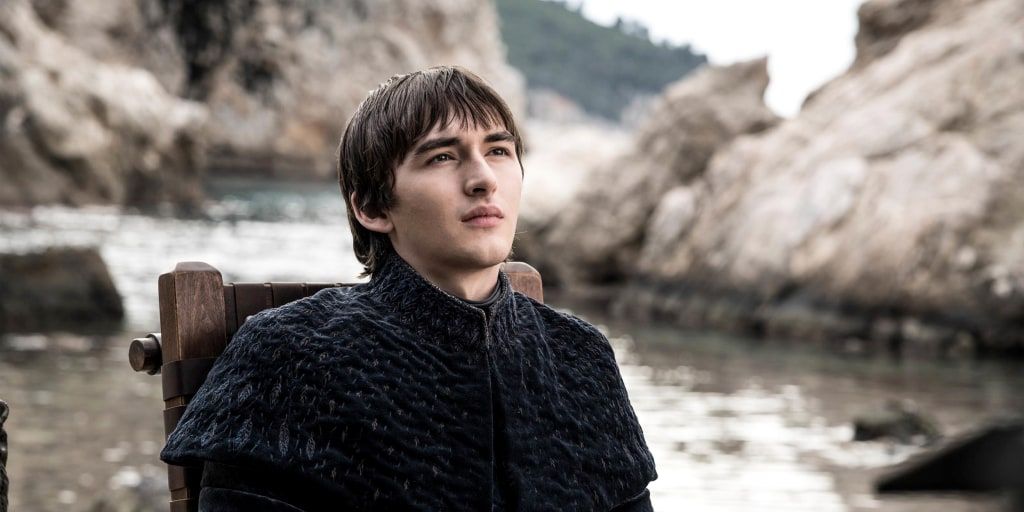
It can not be overstated how much Game of Thrones‘ ending wiped it off the face of the pop cultural discussion with unprecedented immediacy. A show that had come to embody the very idea of Prestige Event TV for close to a decade withered and shriveled into the cold night. There appeared to be a state of mass hypnosis wherein for the following year, we all silently agreed to never bring it up in earnest, lest we reopen old wounds. What’s more is that the hastened productions of the final two seasons (which existed without further material to adapt from George R.R. Martin) were brought about by the showrunners being offered a Star Wars trilogy of their own to helm. The great irony is that in hurtling headlong towards the finish line in pursuit of Star Wars fame, Benioff & Weiss squandered all the buildup and goodwill of the show, doing hasty disservice in succession, one character after the next. The reactions to the finale were so palpable that the pair would ultimately have their Star Wars trilogy revoked from them. Fans of the show settled for looking back fondly on the first four truly excellent seasons of Thrones, with varying degrees of success in the seasons that followed.
And though there was much hesitation to being swindled into another unsatisfying rug-pull of a finale, when the spin-off House of the Dragon was announced, many approached it with cautious optimism. We all want the shows we watch to be good, no? After a well-executed first season, viewers tuned in to see how the narrative would continue to unfold. Season two on the whole had some very solid, thrilling moments, peppered with meaningful character arcs, but unfortunately suffered from a shortened season order and script rewrites that would truncate the episodes down from 10 to 8. This led to the season finale feeling as though it operated entirely as setup for the season to come, and less a bookend for the current chapter of the story. That being said, the show displayed a handful of strengths in its sophomore outing. Chief among them are the lengths HotD goes to in order to bolster the prophecy of A Song of Ice and Fire. Daemon Targaryen, having self-actualized through a series of haunting therapy sessions at Harrenhal, is rewarded by local witch Alys Rivers with a glimpse of the future to come. And though gripping and visually stunning, the gesture collapses once you remember with just how much totality the parent series trampled over any chance of that future coming to meaningful fruition. It all ends with Dany dead, Jon denied his birthright, the brunt of Winter’s looming arrival being resolved in a single evening, and Bran on the Iron Throne. Any retroactive gravitas given to the prophecy deflates upon impact.

Another instance of a show’s series finale seemingly undoing the goodwill of its audience is none other than How I Met Your Mother. For 9 seasons, Ted Moseby recounts to his children the circumstances that led to their parents’ initial meeting. However, in its final hour, the show reveals that the titular mother ultimately succumbed to cancer, and that the long-winded retelling of parental romance is but a mere stepping stone to receive the blessing to move on and pursue his longest target of the heart – Robin. And though, dear reader, I am far from a major detractor of this particular ending (I think it’s a decidedly realistic depiction of finding a once-in-a-lifetime love, it having a finite end, and embracing that you still have to live your life in its absence), there are many who felt overtly slighted by the story’s end. So much so that there exists an entire alternate cut that leads up to a much more central answer of the titular question.

Refuting the ending you are given is an exercise of the literary technique known as “Death of the Author,” wherein authorial intent is buried with the series’ creator, freeing the viewer to chart their own ending as they see fit. This is not limited to the realm of television (this is but one application of the theory). This particular lens of media analysis can be applied broadly, even (and sometimes, especially) to film. A recent filmatic series finale that has left a gaping hole in my heart since 2019 is none other than Star Wars Episode IX: The Rise of Skywalker. Where do I even begin to address how this entry fails not only its narrative, but its characters, their arcs, and the larger Star Wars franchise on the whole?
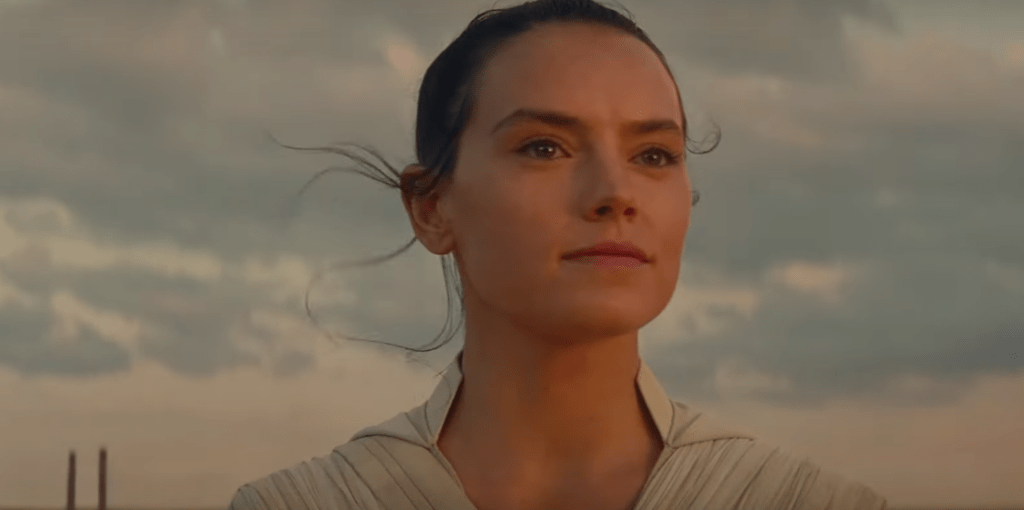
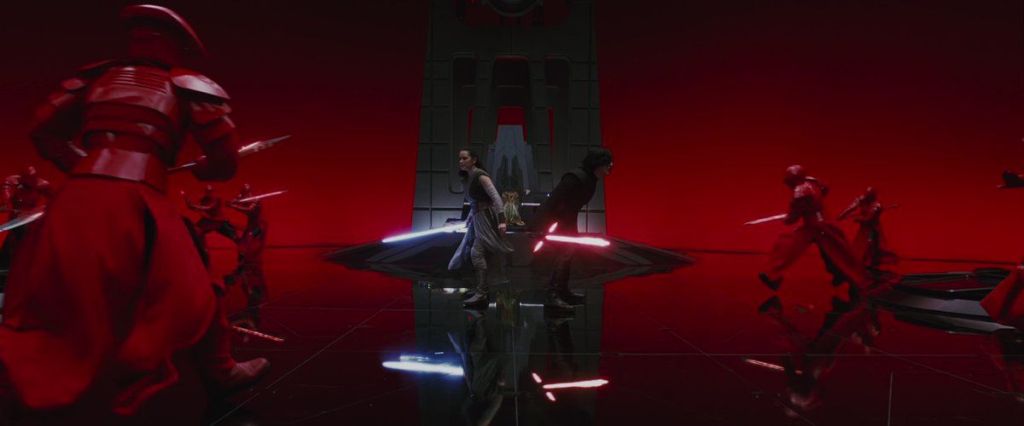
I’ll take a couple steps back. Though Star Wars has long been an interest of mine, it always felt as though it belonged to my parents. Watching and rewatching the Original Trilogy on VHS in the ’90s gave me a sense that I was peering into something beloved that while thrilling, was not my own. Watching Kylo Ren use The Force to stop a blaster bolt in midair in the opening minutes of Episode VII: The Force Awakens made me turn to my best friend and whisper “I think this is our Star Wars.” I was immediately charmed by the new ensemble of characters, as well as the return of old favorites. That first film of this new trilogy, while not flawless, had me absolutely in a vicegrip. I had seen the film close to ten times while it was in theaters, paying particular attention to the nuances of the new characters, especially that of Rey, this trilogy’s heroine. Abrams’ mystery box approach to her lineage is an interesting question that begets many a theorized response. And while derided vocally by hundreds in any online space where the words Star Wars can ever be uttered, Episode VIII: The Last Jedi is a quantum leap for the series. Its interrogation of outdated good/bad binaries, democratization of The Force, and eagerness to strip legacies of their own burdens (re: utilizing the prequels as a lens into how The Jedi Order needs to evolve) allow this film to finally look in the direction of the franchise’s future; no longer must anybody inherit the mighty blood of existing characters to heed the call to action, nor should any shadowy puppetmaster (like Snoke) be given free rein to control the stakes. Our heroes have evolved, so too must our villains. By the end, Rey & Kylo Ren’s bond is magnetic and irrefutable, and yet they each embody opposing sides of the war.
The Rise of Skywalker in its very script conception is a sniveling, black-hearted capitulation to the many advancements brought on by Episode VIII. The unending vitriol leveraged against a film with such clear thematic underpinnings forever changed my mind on giving the general public the benefit of the doubt in being able to discern quality (especially quality that is built to last). Episode IX is not built to last. It is built to jettison the audience onto a slipshod roller coaster track in the hopes that never slowing down will mean that no one notices the foundation the film is built upon is utterly drivel. TRoS oozes pathetic contempt, as if looking to the audience with puppy dog eyes, begging “Please! Please! I didn’t mean it! Look at all these cool things! Here’s Lando! You like Lando, right? Hey, here’s Sheev again… inexplicably. You know him!”
There isn’t a single character by the end that isn’t demonstrably worsened by this film. Luke and Leia somehow know of the obvious-retcon “truth” of Rey’s Palpatine lineage, and have purposely hid it from her all along? Finn is found out to be Force Sensitive, and uses his newfound powers to exclusively scream “REYYYYYY!!!” in every scene he’s present. Poe is stereotyped to have been a spice runner (drug dealer) in the past (despite that revelation running counter to existing canon from extended material, but I digress), and the film takes the time to have its characters shame him for it??? (Han & Lando were runners, too, but they are never dressed down verbally and with such dirty looks, either). Ben gives his life for the girl he loves, and the narrative and all other characters simply…forget about him entirely????? Rey’s agency (the source of her power) is backtracked upon, and she is remade as an unrecognizable, viriginal-white-cloaked facsimile of herself who suddenly cares about being worthy of Luke’s saber? (She’s literally a scavenger that has no problem putting to use things which do not “belong” to her on the regular for her own survival, and swung around his saber with gleeful abandon).
Worst of all, in the film’s final moments, after returning to Tattooine to bury the saber which she now suddenly has grown reverent of (in a clear attempt to make her more palatable to loudmouths who loathed The Last Jedi), she is asked by a local – “who are you?” To which she groan-inducingly replies “…Rey Skywalker.” Not only is adopting the name of your mentors who frankly you haven’t spent all that much time with a rejection of the Palpatine reveal…it isn’t even a thematically new swing. Luke finding out he is the son of the Galaxy’s preeminent Jedi slayer and still proudly taking up the Skywalker name has already been done. What’s more is that decision sacrifices all of the richness that comes with Rey choosing to be a hero, despite her parents not being of particular note. The flagrant cynicism that runs rampant throughout Episode IX fails not only Rey, but all that came before it. It is the conclusion of a trilogy of trilogies, and it is not concerned with answering a single thematic question that was laid out prior – what becomes of The Jedi Order? Pffft, who cares? How do we chart the future of The Force? Irrelevant. How do Ben & Rey synthesize the best parts of the Light and Dark Sides to forge a better Galaxy for all? We’ll simply never know.
And to the many who loved The Last Jedi and its nuanced thematic framework, The Rise of Skywalker feels like a calculated spit in the face, crafted specifically to appeal to the vocal minority that continues to shout the loudest on every internet platform. In the end, we are deprived of both meaning and substance. How do we deal with that? Hell, how do I deal with that? We return to Death of the Author. In my eyes, Episode VIII’s hopeful epilogue – that future generations of Force Users will be inspired by the actions of our heroes and will take up the mantle of heroism someday – is where the trilogy ends in my mind. No Pickled Snokes, no Rey Palpatine, no Ben dying and being immediately forgotten by all those who loved him, despite each of the Legacy Characters giving their lives for him. And perhaps the healthiest route to find healing when faced with such overpowering meaninglessness is to try your own hand at writing the ending. Fan fiction is a tried and true devotion of love. And carving out captivating stories that actually utilize the existing narrative threads can be a genuine form of healing for those asked to simply accept the terrible ending they were given.
There’s an oft-cited claim that crops up every now and again at the mention of the Star Wars Sequel Trilogy – “it just needed a full, concrete plan.” This thinking is often reductive and misses the core of what execution needs to honor what comes before it; the Prequel Trilogy was heavily planned in advance, and despite the utterly wild turnaround in public opinion regarding these films in the last decade, their flaws are still achingly apparent. It’s not a plan that makes a trilogy good. The plan could suck. The plan could very much fall on its face again and again. Moreover, flying by the seat of your pants is Star Wars’ lifeblood. Those original three films figured it out along the way (Lucas himself didn’t have the Vader twist in mind as how we ultimately received it; it was only during a script session with Kershner & Kasdan that the idea came to light, as the original reveal of Vader being Leia’s father begged the question – “But how does this affect our protagonist?”)
Understanding the core themes and character motivations throughout will inform a writer such that the story will always progress in a direction that honors what truly matters. A series and series finale that I think does this splendidly is AMC’s criminally-undersung Halt and Catch Fire. This transformative show starts off as “Mad Men, but with computers.” However, every season there is a hard reset on the very premise, shuffling around which of its core four cast members is at the center of the season. The very firm themes of technology as an extension of the human need for connection, as well as the price of innovation are always present regardless of the shake-up. And this leads “Ten of Swords,” the series’ swansong, to hit all the right notes while offering deeply satisfying ends for each character. Having a plan is overrated. Knowing how to continue what you’ve already made by assessing its parts and seeing how they impact the whole will most assuredly lead to a more satisfying finale.

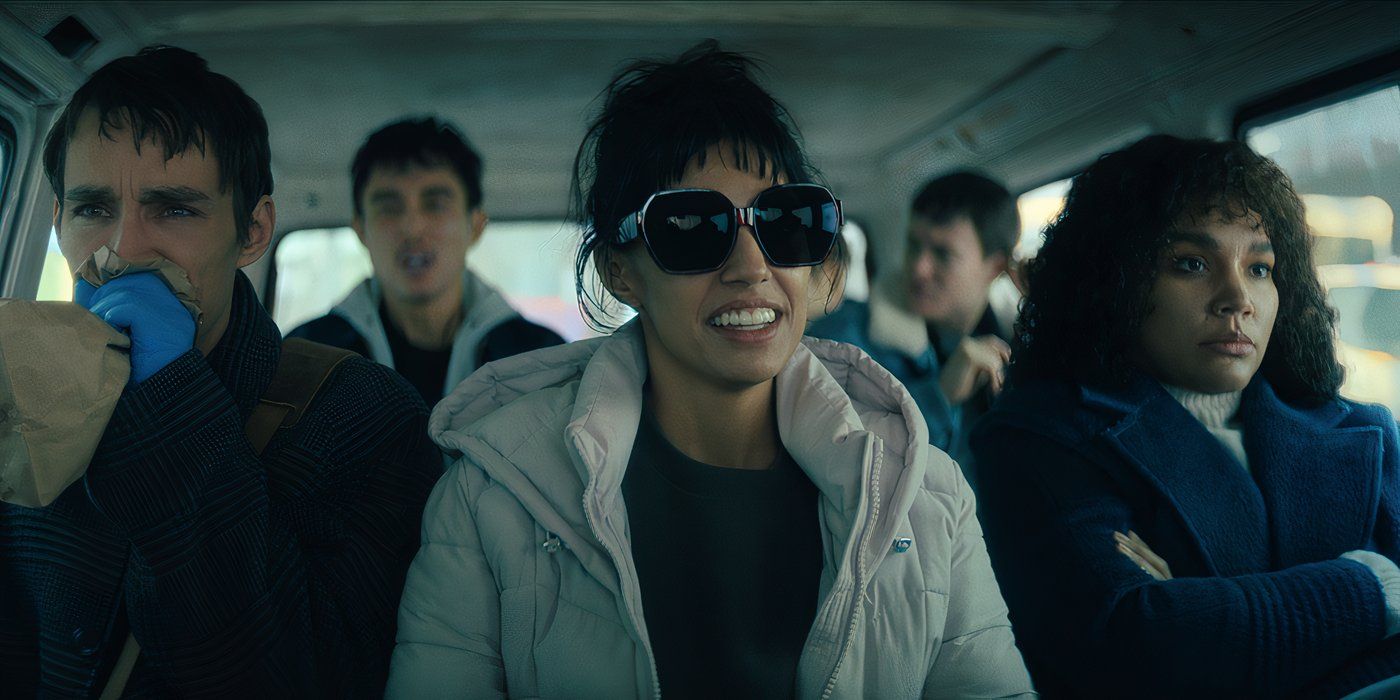
And with all this in mind, we arrive at The Umbrella Academy. If you haven’t already scarfed down the meager fourth and final season on Netflix, you may be shocked to look up the Twitter hashtag and see it filled with consistent displeasure. Whereas the first three seasons offered ten episodes apiece, this final outing boasts a shortened six episodes, in which the overall conclusion is bound to leave a sour taste in the mouths of many. Not only does its episodes fail to meaningfully catch up with the Umbrella-folk and the events of the past season (Luther is never once even given the opportunity to mourn the absence of Sloane), it sprints towards an ending that disguises a decidedly defeatist conclusion as willing heroism. Not to mention the many notable moments of characters doing and saying things that feel wholly incongruous to who we know them to be. Forced romantic melodrama is at the forefront of this complaint (if you’ve watched, you know precisely what I mean).
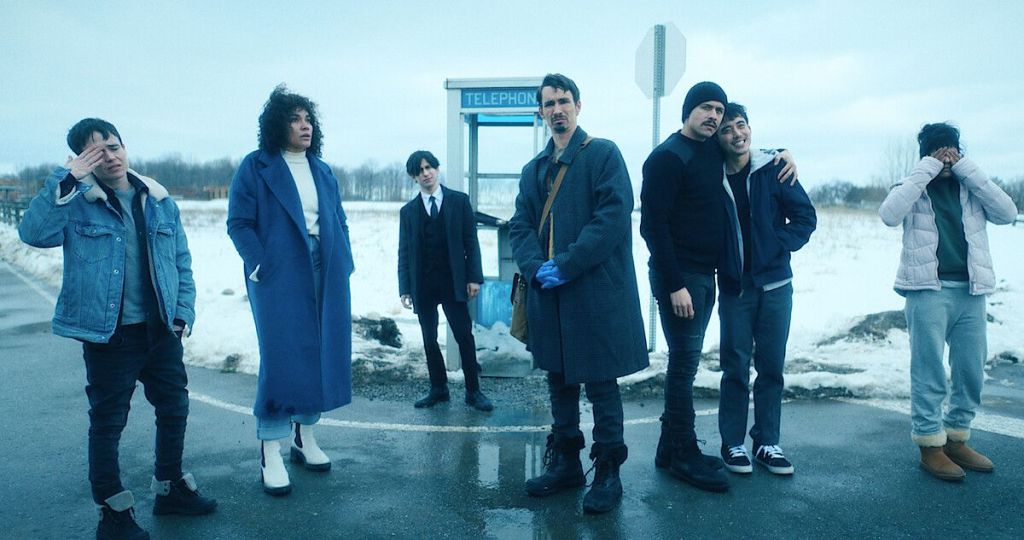
The season-long imminent threat of “The Cleanse” that will purge altered timelines finds our favorite dysfunctional super-powered family tasked with saving the universe yet again. Except, this time is different. The marigold that gave them their powers is needed to nullify a counterreactive chemical, which is consuming the world as an all-encompassing tentacle monster. The solution requires our heroes to knowingly allow themselves to be absorbed and killed for the greater good of all other timelines. However, they all very quickly and uncharacteristically simply accept that this is the only way to save the day this time around – to erase their very existence from history to nullify The Cleanse – when every season prior is predicated on the very idea that the looming threat of the end of the world can always be undone by finding another way. That is the overarching core of this show – a band of misfits that fight like hell to find an alternative to all-consuming demise. And so it’s fair for viewers to feel as though this is a downer ending that gives in to defeatism, rather than a noble and heroic end for our beloved Brellies.
So.
Now what?
When it comes to botched finales, I think it can be inherently deflating to try to reconcile the journey with the destination, knowing that all the strife and triumph along the way ultimately leads to somewhere unsatisfying. I think it is only healthy for viewers to exercise Death of the Author to their own discretion, and even seek their own happy endings by writing what you think should’ve have happened that would have better honored the series’ characters and themes.
Now what? Dear reader, that is for you to decide.
 How Lucky Media