
Putting the fear into the fretting, emerging anew
Glasgow Oughts rock royalty Franz Ferdinand make a bold return with their sixth studio album, The Human Fear. The previous lineup established back in ’02 currently boasts two surviving members – lead singer Alex Kapranos, and bassist Bob Hardy. The record marks the first time their new lineup has fully assembled properly in-studio, putting to use the newly-acquired talents of Dino Bardot (rhythm guitar), Julian Corrie (keyboard, lead guitar) and Audrey Tait (drums). Over the course of 11 tracks and a brisk 35 minutes, Franz revisit the stylistic leanings of every era of their body of work, and tamper with the formulas, song structures, and textures that have defined their sound. Contrasting their last outing, Always Ascending, the band have shed their penchant for experimental disco grooves and synth-led tunes. In many ways, The Human Fear marks a clean bill of health for Franz, hard resetting on the guitar-centric instrumentation that cemented them as a staple of the 2000’s rock scene.
Lead single “Audacious” commences with an opening riff reminiscent of their earliest work, as if to ease the listener in with comforting familiarity. The song bursts into larger-than-life theatrics on the chorus. Its lyrics urge the listener to fight the fear of stagnation, the fear of remaining unknown, and ultimately is a call to arms to be bold. With follow-up “Everydaydreamer,” Bob Hardy’s bass leads the pack. Wispy, breathy backing vocals allow the chorus to glide through a brief cascade of synths. Kapranos’ syrupy lilts guide the bridge into a sunlit fade-out that isolates Alex’s voice for optimal effect. Elsewhere on “The Doctor,” Kapranos is admitted to a hospital, and becomes utterly enamored with the bedside manner. Stockholm Syndrome sets in alongside a slick rhythm section on one of the breeziest runtimes in the tracklist. “I’ve become accustomed to this level of affection/I have nurses I can talk to, and thermometers to hold,” the narrator admits under a heavy dosage of anesthesia.
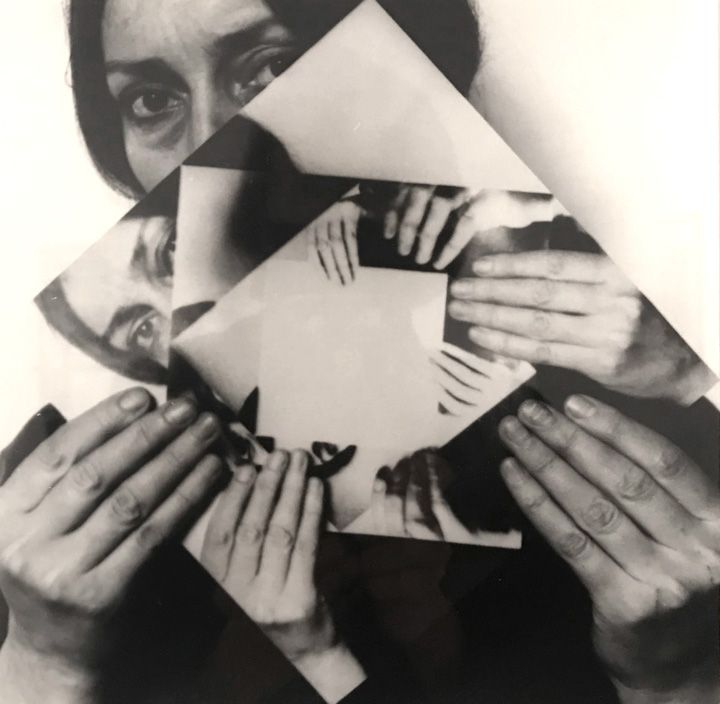
Kapranos has been open about how visual artist Dora Maurer‘s “Seven Twists” has injected much inspiration towards the aesthetics of The Human Fear, remarking “It has a strong, unforgettable, immediate impact, yet triggers your own emotional response, bringing it a depth which allows many returns.” As far as initial reactions go, I tend to agree, imagining that I will find myself returning to this record with greater frequency than their last studio outing. Each song carries with it a deep-down fear that is combated by the urge to be seen, be human, and connect. Or, as Alex phrases it on single “Hooked,” “I got the fear, I got the human fear/But that’s alright, that’s alright.” Electronic drum pads are the key ingredient to the danciest offering in Franz’s catalog in years. “I thought I knew what love was/And then I met you/I’m hooked/Uh huh, you got me hooked,” Alex confesses, confronting the trepidation of being completely under someone’s spell.
At the halfway point “Build It Up”‘s trademark clap-snare percussion allows the listener to wipe the dancefloor sweat off their foreheads. Fittingly, the song builds up to a scratchy Kapranos guitar solo. “Night & Day” is the purest distillation of The Human Fear’s strengths – sweeping peaks and contemplative valleys. Led by Corrie’s keyboard, Kapranos is at his most sultry in moments of ramping up to the chorus. The track has the greatest potential for onstage translation, boasting great synergy across the board. It is the perfect centerpiece that anchors the record with a display of the five piece’s chemistry in and out of the studio booth.
At just under five minutes long, “Tell Me I Should Stay” is one of the longer, more patient cuts on the tracklist, starting cheekily with Julian on pianos, incorporating slinky bass, and eventually bursting into an energetic chorus. It is perhaps the most measured track, speeding up and catching its breath throughout. “C’mon kiss me now, kiss me while I’m still here/ c’mon hold me, kiss me, tell me I should stay here” Alex croons over a series of dynamic tempo changes. The instrumentation on “Cats” sonically hearkens back to their sophomore outing, You Could Have It So Much Better, while lyrically depicting a tale of mismatched personalities – “We love everyone/We love no one” – a cat being fawned over by a golden retriever. Such is the case with love languages – not everyone is poised to receive the way are willing to give.
On “Black Eyelashes,” Kapranos reckons with his Greek lineage and the fear of not measuring up to his own cultural identity. Alex assesses his appearance while accompanied by Southern European musical stylings one might find at a Greek wedding. “Bar Lonely” is a tale of bass-fueled drunken isolation. References to the alcohol-lined streets of the Golden Gai district in Shinjuku and evocative lyrical imagery allow this track to truly immerse the listener in the downward spiral of yet another bender. Closer “The Birds” bookends the record with a manic clash and a fade.”Thank you for accepting me despite what I have done,” Alex sings with clipped wings. This final track underlines their sonic recommitment to guitar and the bare essentials. On the whole, The Human Fear marks a revitalized Franz Ferdinand – different in lineup, stronger in vision, and reavowed to the rock palette that first gave them their meteoric rise.
Highlight tracks: “Audacious,” “The Doctor,” “Hooked,” “Night & Day,” “Tell Me I Should Stay”
 How Lucky Media