
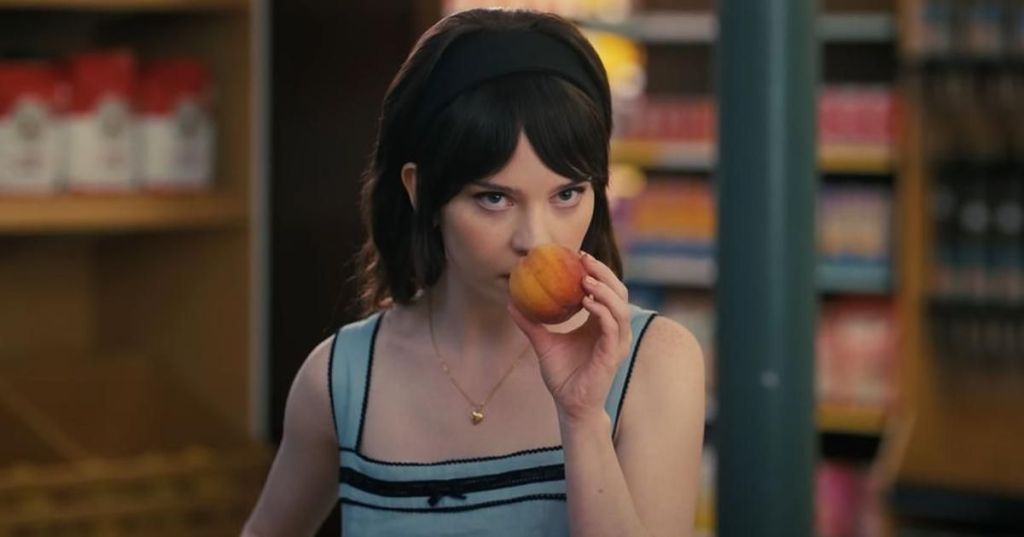
In a media landscape replete with pre-trailer teasers and an overt lack of restraint, movie trailers have become too comfortable with revealing every single narrative beat in advance. I was deeply refreshed by how expertly Companion conveyed its tone in its first 90-second trailer without handing me the plot on a silver platter. As such, this review will operate spoiler-free to preserve the sacred fun of in-theater discovery, at most gesturing to the premise while exercising a couth tongue. Drew Hancock‘s debut feature-length is a thriller in rom-com’s clothing. Sophie Thatcher‘s Iris recollects the too-good-to-be-true beginning of her relationship with Josh (imbued with spectacular punchability by a self-righteous Jack Quaid) via voiceover with words that will serve to bookend her journey.
The film holds its cards close to its chest with regards to its central premise, relishing in a first act that obscures the nature of characters and their relationships with one another. On the surface, Companion may seem like a Westworld-esque twist on a rom-com, and while it savors dipping often into the thriller genre, it is also not bereft of genuine laughs. Underlining the latter half of the rom-com, there were moments, lines, and deliveries that had my matinee audience in stitches. A perfectly-paced, 97 minute, better-with-a-packed-theater kind of experience that surprised me with how many times the dark comedy landed. Hancock’s ability to direct these scenes while maintaining a consistent tone is a testament to his relationship with his cast and his ability to capture their range.

The bonny pair is invited to a getaway trip to a billionaire’s estate. The bookended monologue that both opens and closes the film recontexutalizes the initially glossy-eyed look at Iris & Josh’s relationship. Striking pastels and naturalistic woodland lighting by cinematographer Eli Born lend a level of dreaminess to the primary facade, dipping into much more blood-soaked, violent delights as the narrative darts onward. The script is decidedly nimble and airtight for a first go-around, as Hancock sprinkles in twist after reversal, after smart decision, allowing the characters to never feel inauthentically cliche. Thatcher, in particular, soars as consciousness rises to the surface, swapping up a thousand-yard stare for a menacing scowl and equal ferocity to boot.
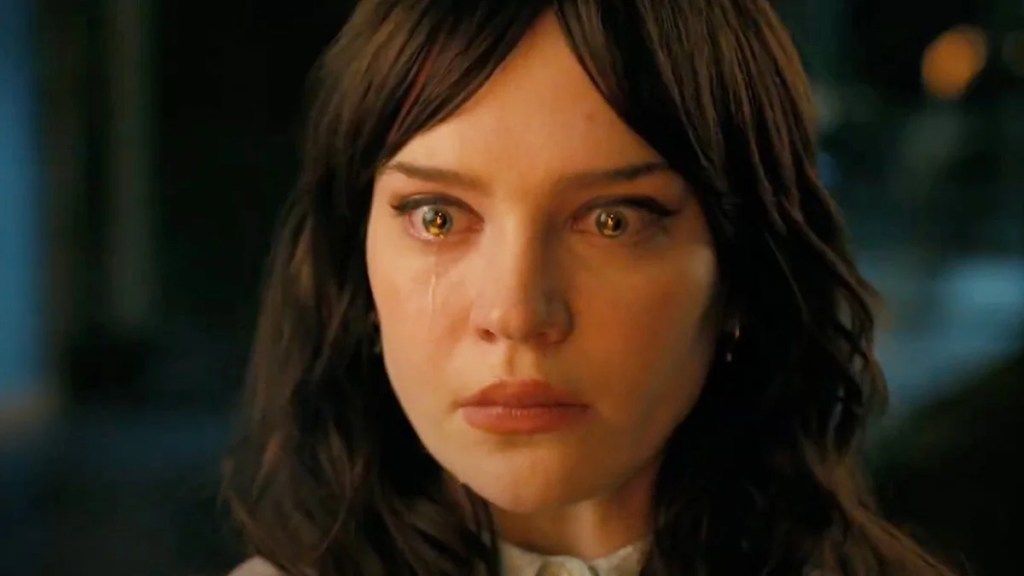
The audience is primed to root for Iris’ self-actualization, as the rose-tinted titular companionship she finds herself in is revealed to be the machinations of male entitlement. Josh is prone to fits of vocal self-pity that he emulates onto his love of Iris. He is very much a stand-in for the romantically-unfulfilled self-proclaimed “Nice Guy™” and all of that archetype’s thinly-veiled worst tendencies. Iris’ autonomy stands in direct contrast to the toxic control she finds herself subjected to, and once the film introduces violence as a mechanism for the plot, all bets are off. The flick examines themes of controlling relationships, technology, artificial intelligence, and self-determination. A full-bodied, rip-roaring, downright entertaining addition to the Good for Her™ cinematic universe.
 How Lucky Media