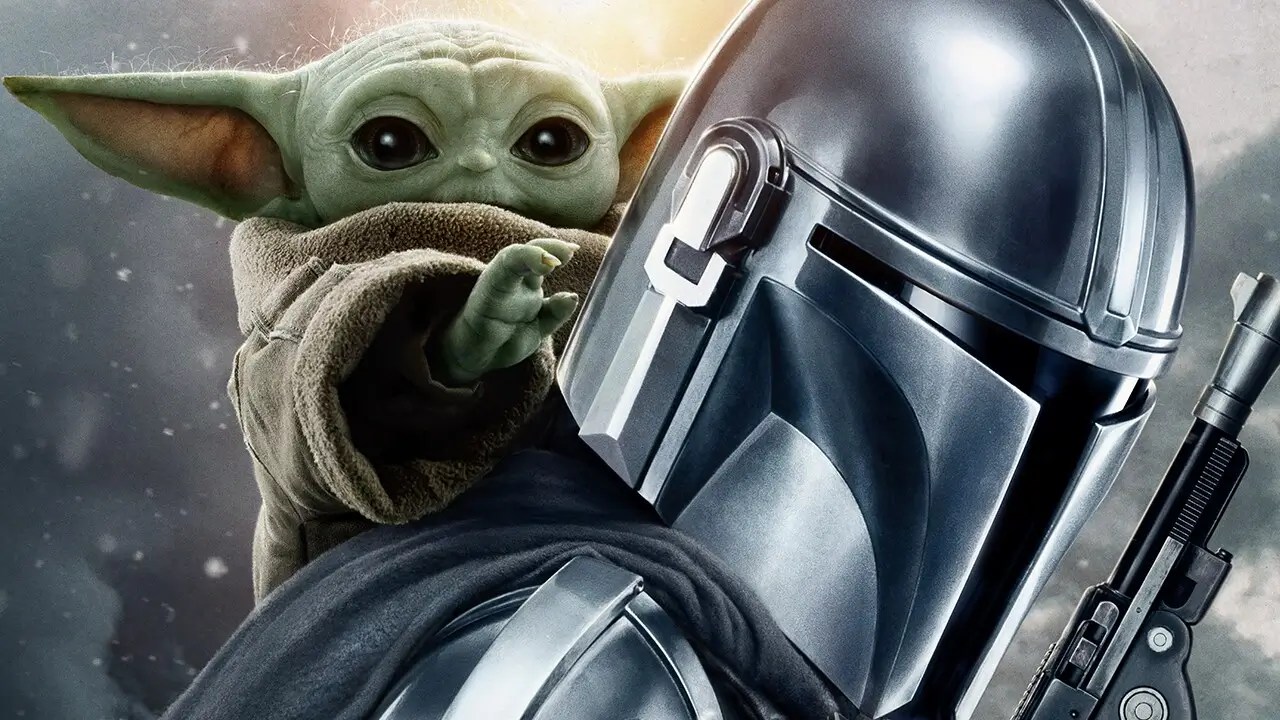
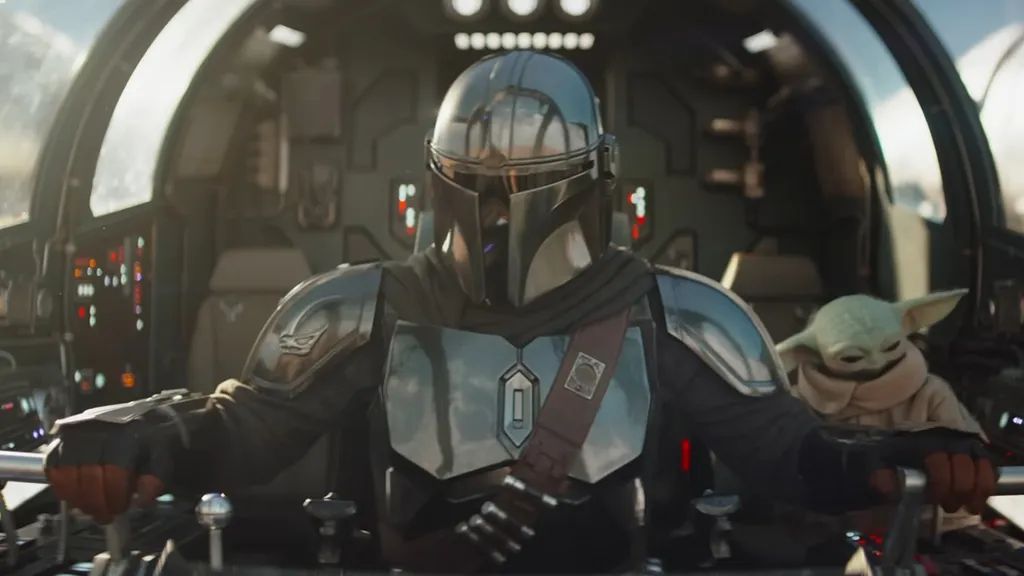
Following the utter mythic failure and ceaselessly-tarnishing trilogy capper of 2019’s The Rise of Skywalker, Star Wars as a franchise has fled to the sterile, unchallenging environs of Disney+, where it has lived a mostly sheltered life of chasing after hits of nostalgia. The franchise’s first D+ live-action outing, The Mandalorian, opened to much acclaim, providing a backdoor for what essentially operated as a stealth Boba Fett series before the ill-fated Book of Boba Fett ever came to be. Especially in the wake of Episode IX, its slick, self-contained neo-Western sensibilities – in tandem with the addition of overnight merch sensation, Baby Yoda (or as he was still then-known, The Child) – provided a much-needed alternative to the debilitating, soul-crushing collapse of the very mythic framework that George Lucas & co. built over the course of decades.
The Mandalorian‘s debut season was a no-frills, whiz-bang success, not unlike the Flash Gordon serials that had inspired George all those years prior. However. The cracks quickly started to show in the second season, as the series succumbed to the pitfalls of interconnectivity; existing completely untethered to the greater affiliations of The Skywalker Saga, The Mandalorian had the unique opportunity to operate in the shadowy corners of that Galaxy Far, Far Away that we all know and love. And yet, it immediately caved to the pressures of intertextuality, first by using the show as a grounds for a series of obvious potential backdoor pilots: gauging whether people would be willing to tune in for a standalone show for Cobb Vanth? Ahsoka? Boba Fett? Bo Katan? The Rangers of The New Republic? And yet I was looked at skeptically when bringing up these points during my weekly recaps for Season 2. If ever there was any question of if The Mandalorian would aim to remain in a lane unoccupied, away from the ails of the mainline continuity, the season finale swooped right in, Uncanny Valley deepfake Luke Skywalker and all, and dashed such hopes with reckless abandon. There could be no mistaking the direction it hoped to exist within the timeline.
Mando wasn’t content to remain within the confines of his own show, outright hijacking what already was a scant six episode season order of Book of Boba Fett. These episodes acted as a deeply unnecessary Season 2.5, setting up the resetting of stakes such that Beskar Head & Baby could run it back for an even more disastrous third season. Filled to the brim with contrivances and wheel-spinning galore, the show made it achingly apparent to audiences a truth that had been looming for some time: our oft-helmeted protagonist, Din Djarin, would never be allowed to undergo any meaningful long-term character arc. Every choice and challenge would be walked back all in the name of pursuing a never-ending middle – a larger symptom of modern media’s refusal to allow good things to come to an end (after all, there’s always more money to chase).
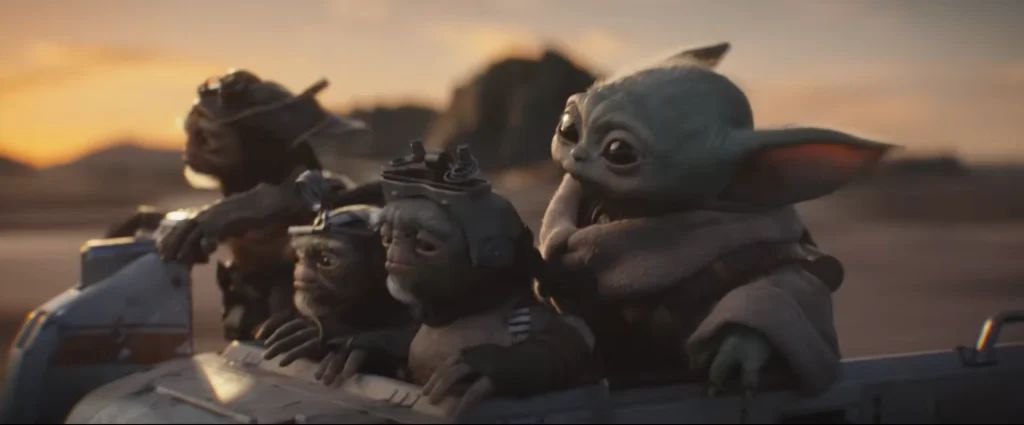
All of this is pre-context, mind you. Jon Favreau & Dave Filoni‘s horridly-titled The Mandalorian & Grogu could bear no other name, mostly on merit of it not being about pursuing any particular aim or theme. Shot for IMAX, yet still bearing all the visual hallmarks of a distracting Disney+ show filmed entirely in front of The Volume soundstages, everything about the lead-up to its release told you everything you need to know about the film; panicked studio heads visually altered the title font for promotional material to better reflect the aesthetics of the aforementioned whiz-bang energy of pulpy Flash Gordon serials to single out its one area of interest – Saturday morning-esque, high-flying, ultimately disposable adventure. Million after million were spent on securing a thirty second Super Bowl ad slot, mimicking the classic Budweiser Clydesdales, but with tauntauns. This would not prove to generate an ounce of interest in the film whereas general audiences were concerned. It forewent releasing a full trailer for as long as it possibly could, because it would affirm what many of us already knew in advance – it would be visibly scant on highlighting the narrative, and instead would underline the explosions and fast-paced action, for fear it would signal to audiences that there wouldn’t be much of a hook to the story more than being effectively an extended episode of the show that you would have to pay to see in theaters (which most I imagine will wait until it inevitably makes its way to D+ in the coming weeks). This feeble marketing campaign seemed determined to say “Hey! Look! It’s Star Wars! You love Star Wars, right? And look! It’s fun! Don’t you like it when Star Wars is fun?” as if to preemptively swat away the hands of the film’s detractors by claiming that anyone who didn’t enjoy it “simply hates fun.” In a post-Andor world, one that has beautifully and meaningfully exacted the fullest potential of what Star Wars could be – for certain on the small screen, and inarguably giving the theatrical outings more than a run for their money – all “fun”, no substance just ain’t cutting it. Tony Gilroy & co. may have spoiled those who tuned in by forever raising the bar for what viewers should expect from this franchise – thrills, themes, sharp political insight, and transformative character arcs. That show and this film seem poised as the platonic endpoints of the Star Wars spectrum – whereas Andor represents the artful rendering of conflict and hope in the face of an insurmountable enemy, The Mandalorian & Grogu stands to exemplify the fast food-ification of the franchise; easy, empty calories that will leave you bloated and ultimately undernourished.
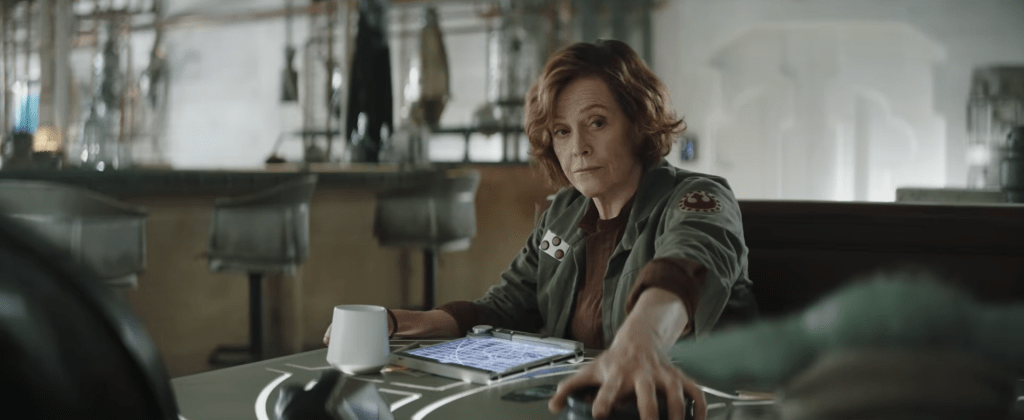
Pedro Pascal lethargically suits up in the titular role, ready to cash a check with a performance that merely gets the job done (leaving the physical acting to stand-ins Brendan Wayne and Lateef Crowder, while mostly providing voicover). Sigourney Weaver is present in a similar gear, with her Colonel Ward being some of the least convincing acting she’s ever turned in. Aping the exact plot points from The Clone Wars animated feature, Mando is tasked with rescuing Stinky, AKA Rotta the Hutt, played by a bafflingly miscast Jeremy Allen White, whose vocal affectations in Basic(Star Wars’ English equivalent) are wholly distracting. Most of the energy is spent in the first half of the film that is frontloaded with action sequences, all of which feel particularly weightless before the pacing screeches to a halt in the back half. Both Din and Grogu – the supposed titular leads – undergo no major character arc throughout the film. The only feasible thematic thread throughout the two hour runtime presents itself through Rotta, who seeds the idea of making a name for himself in spite of his father’s legacy; surely, one would think this would apply to Grogu carving out his own path in spite of his safety being directly tied to his travels with Mando. And yet, absolute bupkis comes from this idea, instead opting for meandering before the final action setpiece. Not even the inclusion of Clone Wars bounty hunter Embo, nor Rebels alumni Zeb Orrelios, are enough to inject much vim in the picture. There used to be a time when a new theatrical Star Wars release meant something (if you ask me, this film is simply a public buffer meant to fall on its sword to relieve the upcoming Star Wars: Starfighter the pressure of being the first theatrical release after Episode IX). These used to be massive pop cultural events wherein a new blockbuster added another patch to a mythic storytelling quilt, rather than four episodes of a show stapled together haphazardly. Yet The Mandalorian & Grogu signals something far more sinister – a cheapening of the very theatrical experience altogether. It is a “film” born from the endless Content Cycle generating disposable entries that you’ll have long forgotten about by the time you get back home from the theaters.
This is NOT The Way.

