Note: This editorial contains SPOILERS for One Night Only, The Invite, I Want Your Sex, & Teenage Sex and Death at Camp Miasma. Be warned!!!!
Well, I did it. I went to the One Night Only Singles Opening Night Event at Times Square AMC. And it went exactly as I thought it would go – a number of very attractive girls and a host of very awkward guys, neither of which could find ease in breaking the ice. That is, besides Mark and Ben, the two friends who printed out business cards of each other and operated as mutual wingmen, going to each girl and telling them about why they should give their buddy a follow on Instagram. It’s a wholesome and thoughtful enough approach, just one that had the adverse effect of making every other guy second guess opening his mouth because they had already been beaten to the punch.
I was near a cute girl that I just narrowly missed standing directly next to, as an older woman swooped in seconds before me and unwittingly put her body between us in the queue to get inside (there were delays with the screening that on-paper should have only led to a higher yield of open flirting; the whole point of the screening was to facilitate romantic interactions face-to-face, after all). I resigned to saying nothing, in spite of the occasional glances we shared while waiting to be seated. My seat was the worst in the theater – D8, a complete island unto itself towards the front which was reserved as a wheelchair accompaniment seat – meaning no one was directly on either side of me. This is all just a microcosm of the current gendered stalemate that many experience in these increasingly unromantic, sex-starved times (I haven’t gotten laid in years, mind you). No one’s been having an easy go of finding love, or even a good time in bed.
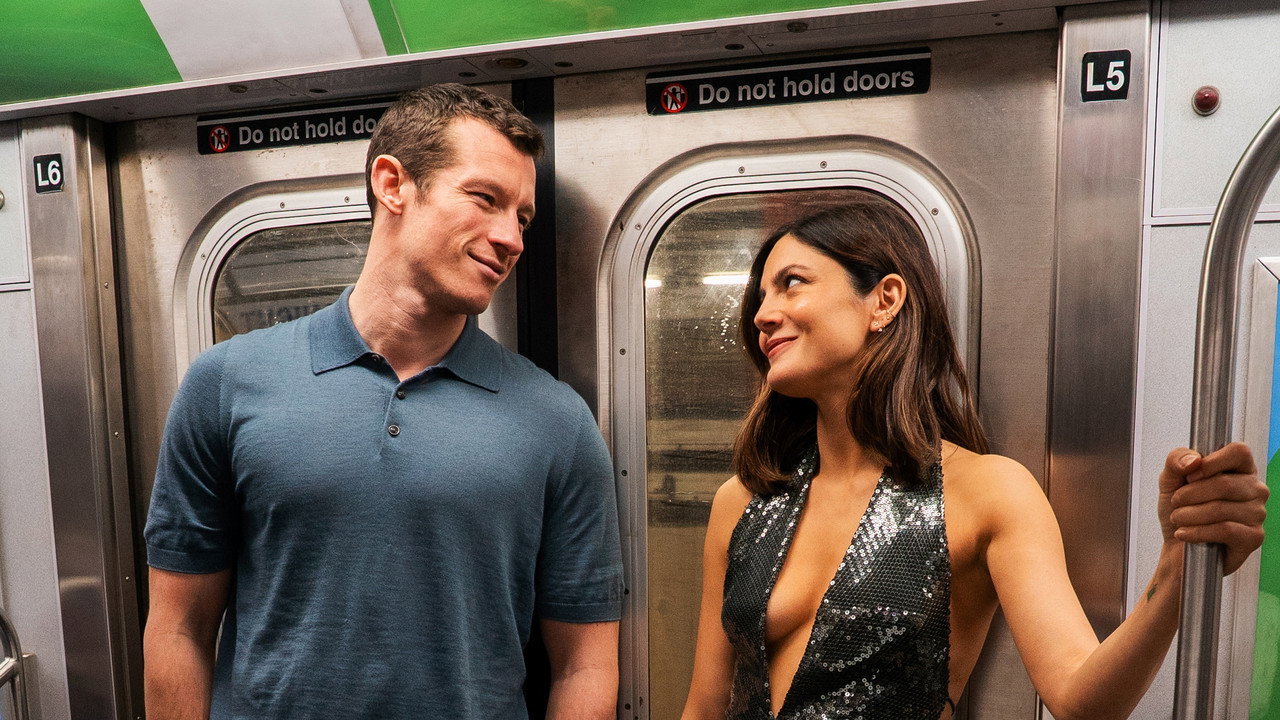
And it’s why the ending of Will Gluck‘s One Night Only sours its very premise; the prudish dystopia of a fascist surveillance state that monitors bodily autonomy except for one night a year skirts the lines of a concept not unlike The Purge; an inherently political foundation that should follow its characters as they navigate the hellscape they’ve inherited. And for much of the film, that’s very much the case – its mise-en-scène is littered with visual flourishes of a New York City three years into a Congress-backed mandate. Funnily enough, last year’s Eternity is another high-concept rom-com led by Callum Turner, who here plays Owen, a pizza shop owner navigating a relationship on the outs on the one night premarital sex has the green light. He is played opposite Monica Barbaro‘s Allie, an aspiring singer whose beautiful voice is spent on parodied pop songs that feature on medical advertisements. There is enough charm and care on display throughout in the filmmaking, though the film itself is not particularly keen on shedding too much light on how we arrived at this particular political moment, aside from throwaway jokes that often allude to facets of our world that are far more insidious at face value (pharma-bro biotech, the single issue voters who led to the Congressional state that allowed for the passing of the mandate, etc).
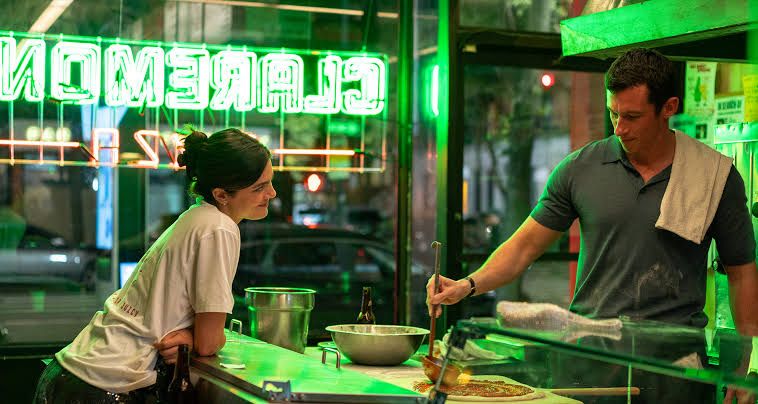
But it’s in the inevitable push-and-pull of Owen and Allie’s love story that the wheels fall off at the finish line: with but minutes to spare and the perfect setting and emotional context to consummate their attraction towards each other, they decide to wait to have sex. A full year at that. They capitulate to the puritanical fascist state, and in doing so reject the idea that sex is part of romance. Those who radically reject the government’s monitoring of their bodily functions are used as discardable punchlines, and our fated lovers only end up reinforcing the conservative status quo during the one night where sex is an act of not just release, but reclamation.
And it brings me back to my own frustrations with the Singles Event where I caved to the long-internalized propaganda that “No woman ever wants to be approached by a man” (whereas many single women seemed to be grappling with their internalized societal programming that “You should never approach them first”). But in these trying times, risking vulnerability and deciding to just go for it is the truly radical option, and One Night Only ends up being another cultural signifier of how much our love lives have succumbed to the cold clamps of conservative modernity. Submitting to your overlords “in the name of romance” and “to get to know each other better” is not the romantic gesture this film seems to think it is. It only serves to underline the regressive, Christofascist idea that sex is an act saved solely for those bound by their devotion to God and marriage. Its agenda aims to enforce gender stereotypes and gender dynamics that uphold a patriarchal society wherein women are child-bearers and men govern all aspects of life, even the bodies of those capable of its creation.
This is far from the only film in recent memory that finds itself messily entangled in the topical bedsheets of our modern sex crisis, especially in how it overlaps with the rise of fascism. Gregg Araki‘s I Want Your Sex is another erotic comedy whose satire is rooted in diagnosing generational differences – Cooper Hoffman‘s sexless, 23 year-old Gen Z protagonist, Elliot, is precisely the kind of inexperienced, porn-addicted stand-in for the sexually repressed young men of his time demands. He is in a loveless, physically and emotionally unfulfilling relationship when he becomes the boy toy of his new boss – the snooty, sex-positive contemporary artist Erika Tracy, played by none other than Olivia Wilde. Wildly inappropriate as their age-gap workplace relationship is, it allows Elliot to live out his wildest fantasies that he may never have pursued of his own volition. Something awakens in him through the act of sexual exploration as the sub to Erika’s dom. In a fit of very blunt, on-the-nose dialogue (perhaps necessary to avoid subtlety in an age of increasingly dopamine-addicted audience members who can’t keep their smartphones tucked away for a full 90 minutes), Erika lays out her perceived faults of Elliot’s generation – too, in her own words, “chickenshit” to ever make the first move. Content to hide behind the safety of screens. I’m again reminded how I myself am not immune to the societal propaganda that is handed down to us, even as a millennial, and how I and just about every guy – whose names weren’t Mark or Ben – at the AMC Singles Opening Night Event remained frozen when given an additional twenty minutes to mingle with openly single women around them.
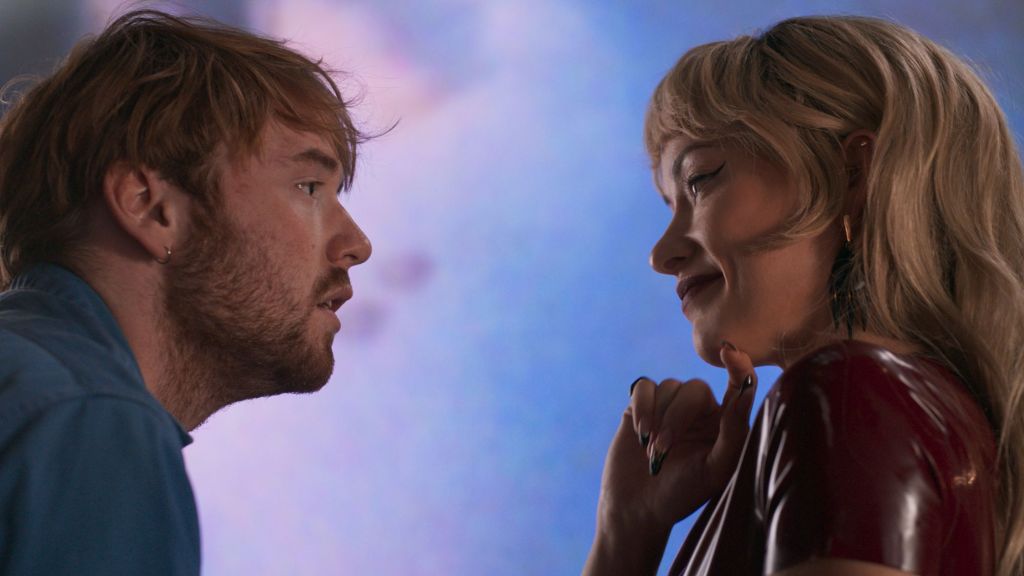
Elliot is the exact kind of inhibited young man that fascism counts on in order to propagate – lonely, unfulfilled, and with no meaningful outlet to channel his desires. There is a reason Gen Z has been charged with being the most openly puritanical generation in some decades, unable to reconcile their desire with their inability to exercise it in any material fashion apart from claw-gripped gooning. These men are easily co-opted by online shysters and hate campaigners; podcaster cults of personality that decry the Male Loneliness Epidemic and The Sexlessness Epidemic as two separate issues without any damning connective tissue. The Joe Rogans and Andrew Tates of the world, the Manosphere grifters. Reframing and weaponizing sex as something men are entitled to from women only puts into motion the same gears that power the fascist machine. Radicalizing these young men serves to supercharge them as frontline pundits for the very pillars that uphold the institution. The wrinkle, of course, is that Gregg Araki uses I Want Your Sex as a way to speak directly to such audience members, arguing that the act of sex is formative for one’s self-identity. We are made in the act of doing. And to surrender to another whom you trust enough to share skin-to-skin is a beautiful, vulnerable thing.
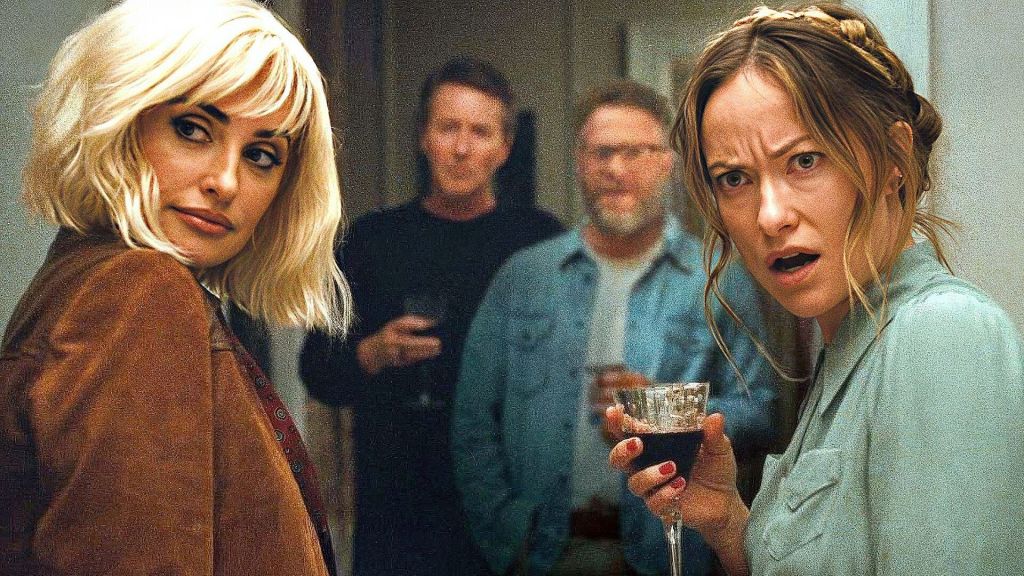
If you can believe it, I Want Your Sex is not the only Olivia Wilde-led erotic comedy to premiere this summer. Her own film, The Invite, is a tour-de-force four-person ensemble sex satire that has plenty to say on the matter. It is very sex positive upfront, even if the underlying tensions between both pairs of couples exist in and outside of the bedroom. Penelope Cruz & Edward Norton‘s Piná and Hawk are very much mirrors of whom Seth Rogen & Olivia Wilde‘s leads wish they could be: free, sexually liberated, and unburdened by domestic bickering. “Sex is not a thing you do, it’s a place you go,” Piná asserts. The sultry therapist agrees to visit the stiff couple with her partner on the pretense of addressing their loud noisemaking in the late hours of the evening, brought to life to hilarious effect by an especially zany, thought-provoking screenplay. The Invite‘s assertion that sex has no place for resentment, misery, nor ego, and that failing marriages often find themselves floundering in the bedroom opens up much-needed discussion about its role in our relationships. If we let the government dictate our attitudes towards sex, towards gender, how will we ever mediate the growing rifts between each other?
Lastly, when navigating the unplanned portrait of our modern times and its thorny relationship with sex and our own bodies, enter: Camp Miasma. Jane Schoenbrun achieved major critical acclaim for their sophomore picture, the soul-piercing, existential, television-backlit I Saw The TV Glow. With a unanimous blank check in hand, Schoenbrun took to the scriptwriting process for their third outing – Teenage Sex and Death at Camp Miasma. This meta-slasher is born of Zombie IPs, Final Girls, and the desire to reclaim pleasure in your own body. Following Schoenbrun’s transition, there was a period of readjustment in the bedroom, with Hannah Einbinder‘s Kris as an extension of their challenges in allowing themselves to experience physical joy.
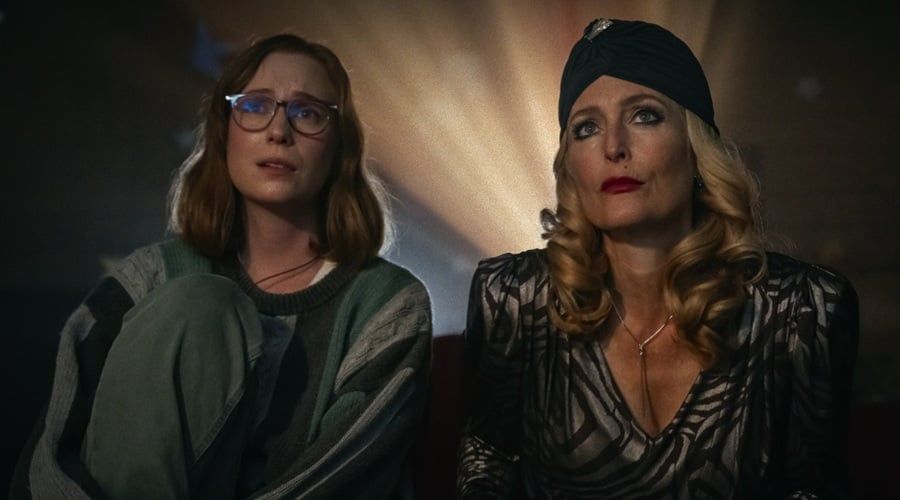
There is an overwhelming sense of psychosexual healing that comes from the final act of Camp Miasma, and it may just be the very thing the increasingly prudish public needs. It’s every bit a film about shedding the shame of your own body, unlearning the societally-imparted lessons of what sex can and should be, and redefining it on your own terms. In its cathartic (literal) climax, Kris and famed Final Girl, Billy (Gillian Anderson), find the immense shared joy of allowing yourself to surrender to the embrace of another. Risk. And reward. Your turn. Then mine. Together, at the same time, if we’re so lucky. The Sexlessness Epidemic does not require that you throw in the towel like Allie and Owen do in the end. Sex and romance are not separate columns; much profound may be found in their Venn Diagram, and there is no act more sexually radical than choosing to bare yourself in every sense of the word. Connection is how we fight dystopia. Fascism thrives in unquestioning submission. Healthy sex thrives in vulnerable entanglement. And we all deserve to get laid more. So go out there and take a risk. Talk to that person. Take that leap. And don’t let your government define the bounds of your body nor the means by which you connect with another. Because, just as Billy Presley states outright, “It’s all play.” So have fun.
One Night Only, The Invite, I Want Your Sex, and Teenage Sex and Death at Camp Miasma are in theaters now.

